

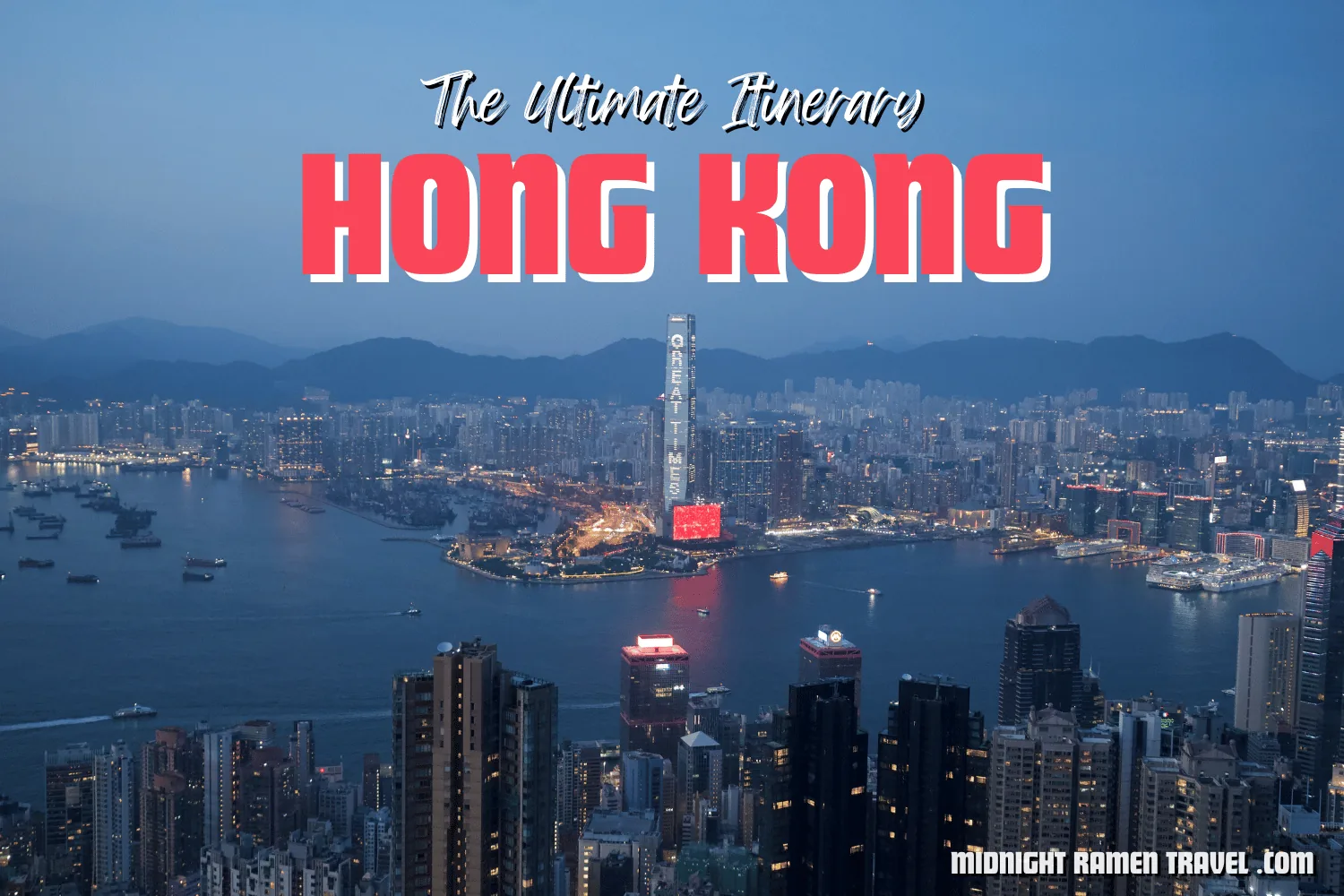
Planning a Hong Kong itinerary? This guide shows you how to spend 3 days in Hong Kong, with practical day-by-day routes across Hong Kong Island, Kowloon and Lantau, plus food stops, maps, transport tips, alternative ideas for Day 3. I hope you find it useful in helping you plan your perfect trip to Hong Kong!! 🙂
Hong Kong is one of my favourite cities in the world. I have been half a dozen times and I still can’t wait to go back. It has that mix of East and West, old and new, and a certain energy that is hard to explain properly, but if you have been, you will know exactly what I mean. It has changed over the decade I have been visiting, but it has kept its own character and is still absolutely worth visiting.
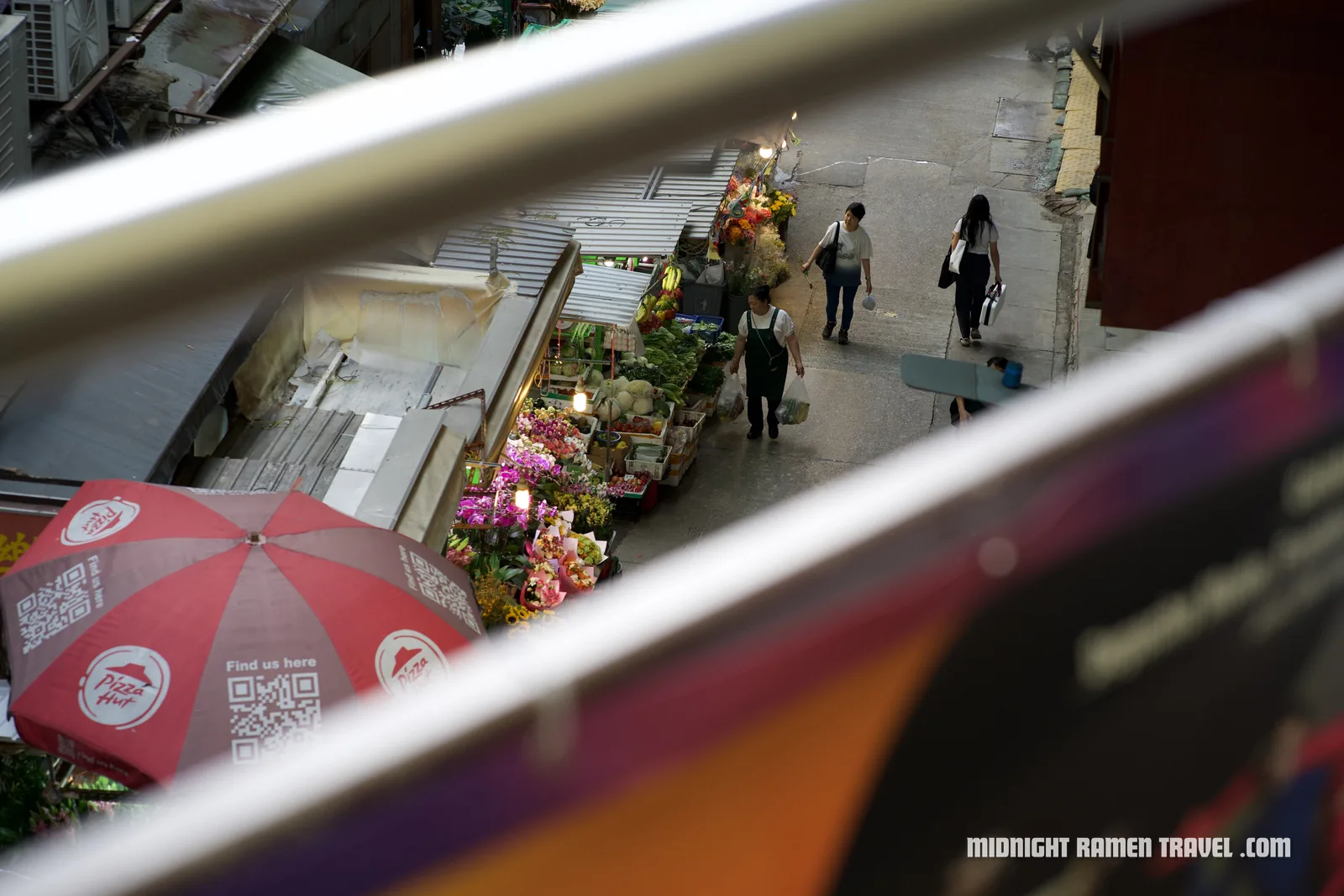
For me, that energy is in the old street vendors and the delivery men pushing carts stacked with products up Central’s steep streets, all a few steps from the soaring glass towers of the financial district. You feel it again in the crowded, hectic streets of Kowloon and in the pace of everyday life: order quickly, eat quickly, leave quickly. Nobody wastes a minute. Hong Kong feels frantic, fast-paced and properly lived-in. That is the energy I keep coming back for.
The trick to a short trip here is route logic. Hong Kong looks small on a map, but the harbour splits it in two and it is easy to burn half a day zigzagging back and forth on the MTR. I have built this Hong Kong itinerary around “clusters” instead. Each day groups things that are physically close, hangs them off one big anchor and still leaves room to wander, because some of the best moments here happen between the planned stops.
This Hong Kong itinerary assumes you are staying on the Kowloon side, but it works just as easily from Hong Kong Island. If you want help deciding, I have a full post on the best areas and hotels: Best Areas to Stay in Hong Kong.
Fair warning: this is a jam-packed itinerary with a lot of walking, so wear comfortable shoes and bring a water bottle. Don’t feel you have to do everything on the list. Follow the route, choose the parts you are most interested in and skip anything that is not your thing.
Hong Kong Itinerary at a Glance
Day 1 – Victoria Harbour to Hong Kong Island
- Cha chaan teng breakfast
- Tsim Sha Tsui Promenade and Avenue of Stars
- Star Ferry to Central
- Central, SoHo and Sheung Wan walking and food route
- The Peak for sunset
- Ding Ding tram to Causeway Bay
- Causeway Bay and dinner
Day 2 – Kowloon
- Nan Lian Garden and Chi Lin Nunnery
- Ping Shek and Choi Hung photo stops
- Kowloon Walled City Park
- Mong Kok and Yau Ma Tei market crawl
- Langham Place and Nathan Road
- Kowloon Park
- K11 MUSEA or the Hong Kong Museum of Art
- Victoria Harbour skyline and Symphony of Lights
- Temple Street Night Market
Day 3 – Lantau Island
- Head to Tung Chung
- Ngong Ping 360 cable car
- Big Buddha and Po Lin Monastery
- Lunch at Ngong Ping or Tai O
- Bus 21 to Tai O
- Explore Tai O fishing village
- Return to the city and finish with a final dinner
Other options for Day 3
- Food tour plus south Hong Kong Island
- Cheung Chau or another outlying island
- Hong Kong Disneyland or Ocean Park
- Macau
- Mainland China
- Hike Dragon’s Back and finish at Shek O
Hong Kong Trip Planning - Useful Resources
Things to Know Before You Go
- Best time to visit Hong Kong? Hong Kong is a year-round destination, with temperatures ranging from around 17°C (63°F) in January to 30°C (86°F) in July. The most comfortable weather is October/November, but expect higher prices and bigger crowds. One thing to plan around: typhoon season runs roughly May–November (peak August–September). Most days are fine, but when a typhoon hits it can shut down transport, shops, and ferries for a day or so. I was once in Hong Kong just after one passed through. Half the trees in the park had branches snapped clean off and the place was a mess. So if you're travelling in summer, build a little flex into your plans. Also note some shops and restaurants close over Chinese New Year (usually February).
- How many days do you need in Hong Kong? I recommend at least 3 full days (excluding day trips) to experience the best parts of the city, but ideally 4-5 days. Personally I could easily fill up 2 whole weeks - so it is really up to how much you want to explore and at what pace.
- How much does it cost? Hong Kong is one of the pricier destinations in Asia, particularly for accommodation, roughly US$200+ for higher-end hotels, US$140–180 mid-range, US$80–120 budget hotels, and US$40–50 for hostels. Activities can add up, but public transport is excellent and very affordable, and food is cheap if you eat where the locals eat. I'd budget US$80–150 per day per person excluding accommodation and shopping.
- Visa: Many nationalities can enter visa-free, though the length varies a lot by passport, anywhere from 7 to 180 days. As an Australian, I get 90 days visa-free, but check your specific country before you book.
- Language: Cantonese is the main language, but English is widely spoken, and Mandarin is common too.
- Currency: Hong Kong dollars (HKD) (100HKD = approx. $13USD)
- Cash vs Card: Both widely accepted, but many local restaurants and street vendors are cash only so grab some from an ATM on arrival.
- Safety: Hong Kong is one of the safest major cities in the world. Violent crime is rare and it's very comfortable to walk around at night, including solo. The emergency number is 999.
- Tipping: Tipping in Hong Kong is not mandatory or generally expected, and a 10% service charge is often added to restaurant bills. That said, I've found tour guides may still expect a tip.
- Power plug: Type G (same as the UK). 220V, 50Hz.
- Getting there: Fly into Hong Kong International Airport, or arrive by high-speed train from mainland China.
- Getting around: The MTR is excellent, affordable, and covers most of what you need. Your Octopus card works across the MTR, buses, ferries, and trams. Taxis are easy to find. HKTaxi and Uber are the main apps.
- Tax refund: No tourist tax refund scheme, but Hong Kong charges no general sales tax on most goods, which already makes shopping here good value.
- Book accommodation early: well-located budget and mid-range places fill up fast, often more than a month out. I'd check both Agoda and Booking.com, since prices vary enough between the two that it's worth comparing before you book.
- Pre-book an eSIM: so you're connected the moment you land.
- Download Google Translate offline (Cantonese), the camera translation feature is genuinely useful for menus and signs.
- Pre-book attraction tickets & download the activity apps: Peak Tram and Disneyland especially sell out. Download whichever app you book through.
- Airport Express tickets: worth pre-booking for a small saving if you know you'll take the train.
- Trip planning: The Hong Kong Tourism Board is a great resource.
Things to Do Upon Arrival
- Get connected: Switch on your eSIM, or grab a physical SIM at the airport or any 7-Eleven.
- Grab some cash from an ATM: Hong Kong is fairly card-friendly, but you'll want cash for smaller local restaurants, street vendors, and markets.
- Get your Octopus Card: available at the airport, MTR stations, and convenience stores. A standard card is around HK$150 (~US$20), which includes HK$100 stored value and a HK$50 refundable deposit upon return.
- Getting into the city:
- Airport Express: fastest option, 24 minutes to Hong Kong Station. Around US$15 one way, slightly cheaper if pre-booked.
- Bus: cheaper and more convenient if your accommodation isn't near an Airport Express station. Around US$5.
- Taxi: easiest if you have heavy luggage or arrive late at night. Expect roughly US$35–45 depending on where you're staying.
Activity Booking Cheatsheet
Most of these are cheaper online than at the gate, and a few, especially the Peak Tram and Disneyland, can sell out (consider bookmarking this section before your trip! 😊)
→ Aberdeen Fishing Village Boat Tour
Wondering where to stay in Hong Kong?
These are the Hong Kong hotels I'd check first, grouped roughly by budget. Use them as a starting point, then compare dates and reviews before booking.
For the full rundown on the best areas and hotels, read my Hong Kong where to stay guide.
My Ultimate 3-Day Hong Kong Itinerary
Day 1 - Hong Kong Island
Day 1 is almost entirely Hong Kong Island, and almost all of it on foot. If you are staying on the Kowloon side, start with a cha chaan teng breakfast, the Tsim Sha Tsui waterfront and the Star Ferry across the harbour. If you are already staying on Hong Kong Island, do not overthink it: have breakfast at a cha chaan teng near your hotel, skip stops 2 and 3 for now, and start straight at stop 4 in Central. You will get the Kowloon waterfront and Star Ferry experience later in this Hong Kong itinerary anyway.
From there, the day becomes a dense walking loop through Central, SoHo and Sheung Wan, before heading up to The Peak for sunset and finishing in the buzz of Causeway Bay. It is honestly one of my favourite single days of city travel anywhere. It is also a big one, so pace yourself.
Morning: Classic Hong Kong
1. Cha chaan teng breakfast
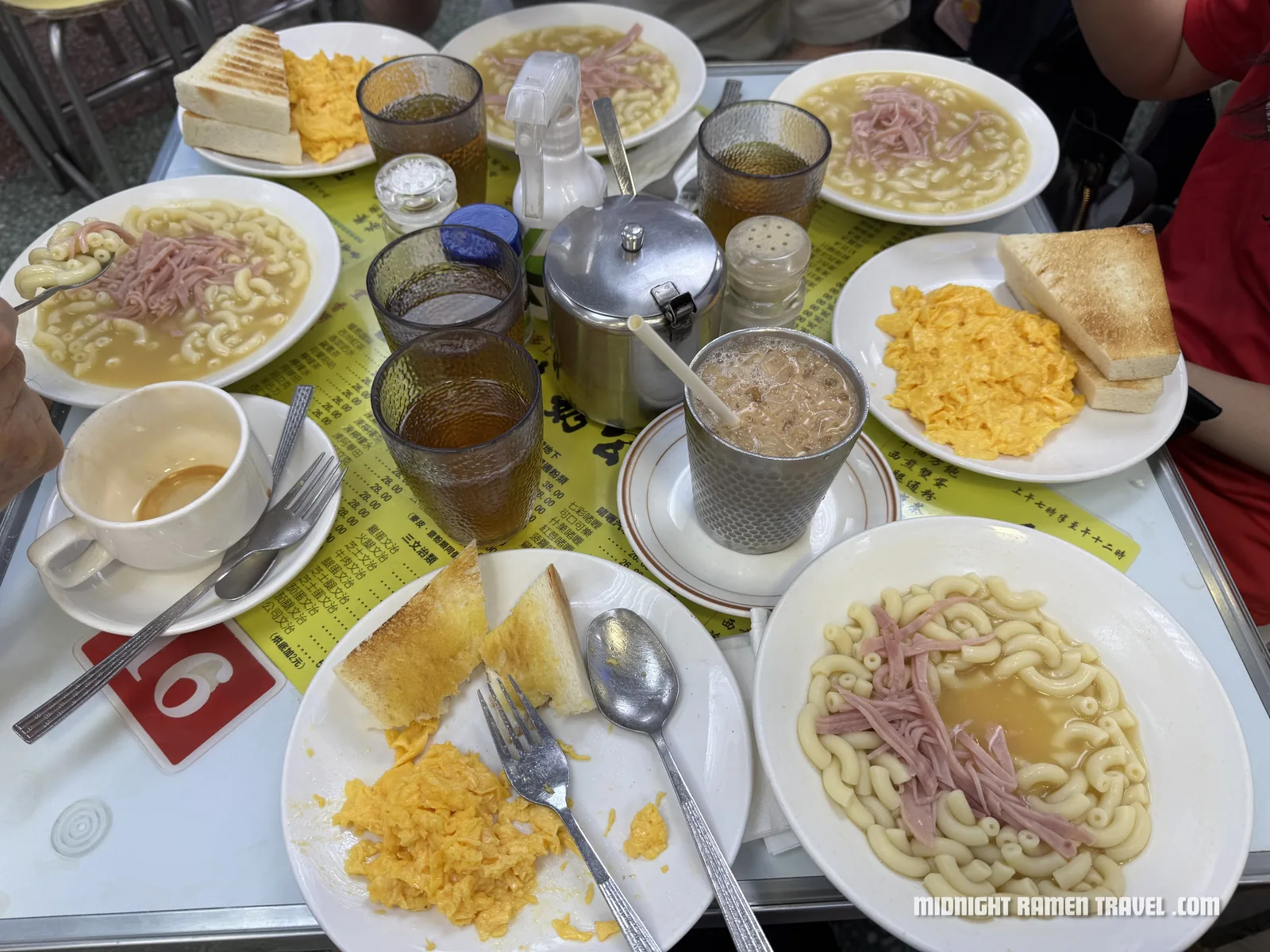
Start the trip in proper Hong Kong style with a cha chaan teng breakfast. This is the city’s old-school local cafe culture: quick service, strong milk tea, toast, eggs, buns, noodles, macaroni soup, and cheap breakfast sets.
I will be honest: this is more about the experience than exceptional food. Expect it to be busy, expect to share a table, and expect slightly chaotic service. That is exactly why I think a first-timer should do it.
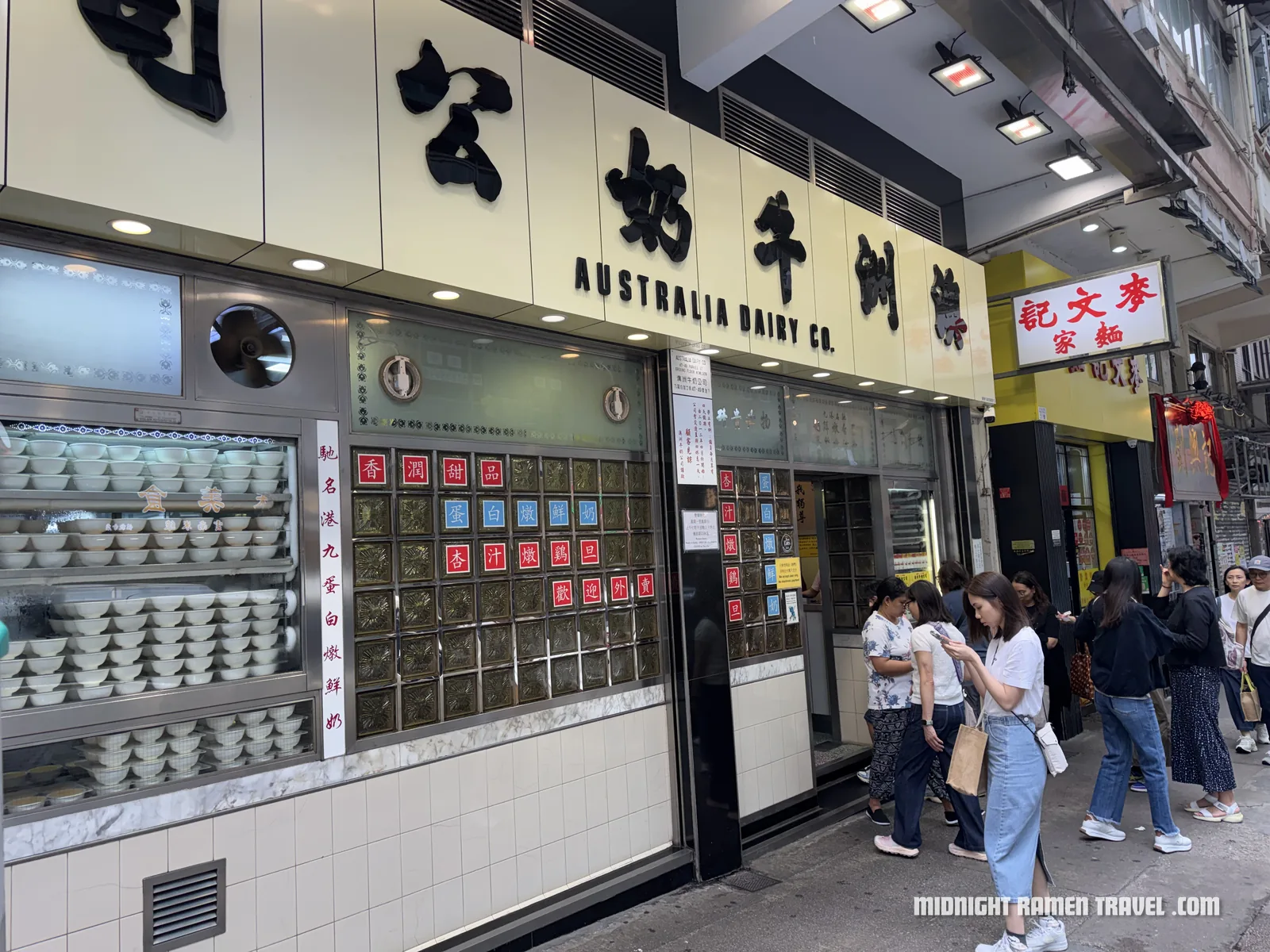
My pick for the full experience is Australia Dairy Company in Jordan. I have ended up here a few times, and it is exactly the sort of chaos people describe: rushed service, shared tables and absolutely no time to sit there studying the menu. Get one of the set breakfasts for the scrambled eggs and add a milk tea. The tea is sweet, but very good. Know what you want before you sit down, because the service is famously blunt, in a joking, kind of not-joking way, and there is a good chance you will be wedged beside an older Hong Kong local who does not speak a word of English.
Other classics include Kam Wah Cafe in Mong Kok and Lan Fong Yuen on Hong Kong Island. If none is near your hotel, just find a busy local cha chaan teng and give it a go. Check the branch’s same-day hours because weekly closure days can change.
Opening hours: Check the chosen cafe’s same-day hours and weekly closure day.
Cost: Usually around HK$50-70 for a breakfast set.
Estimated time: 45 minutes.
Getting there: Australia Dairy Company is near Jordan MTR Station.
2. Tsim Sha Tsui Promenade and Avenue of Stars
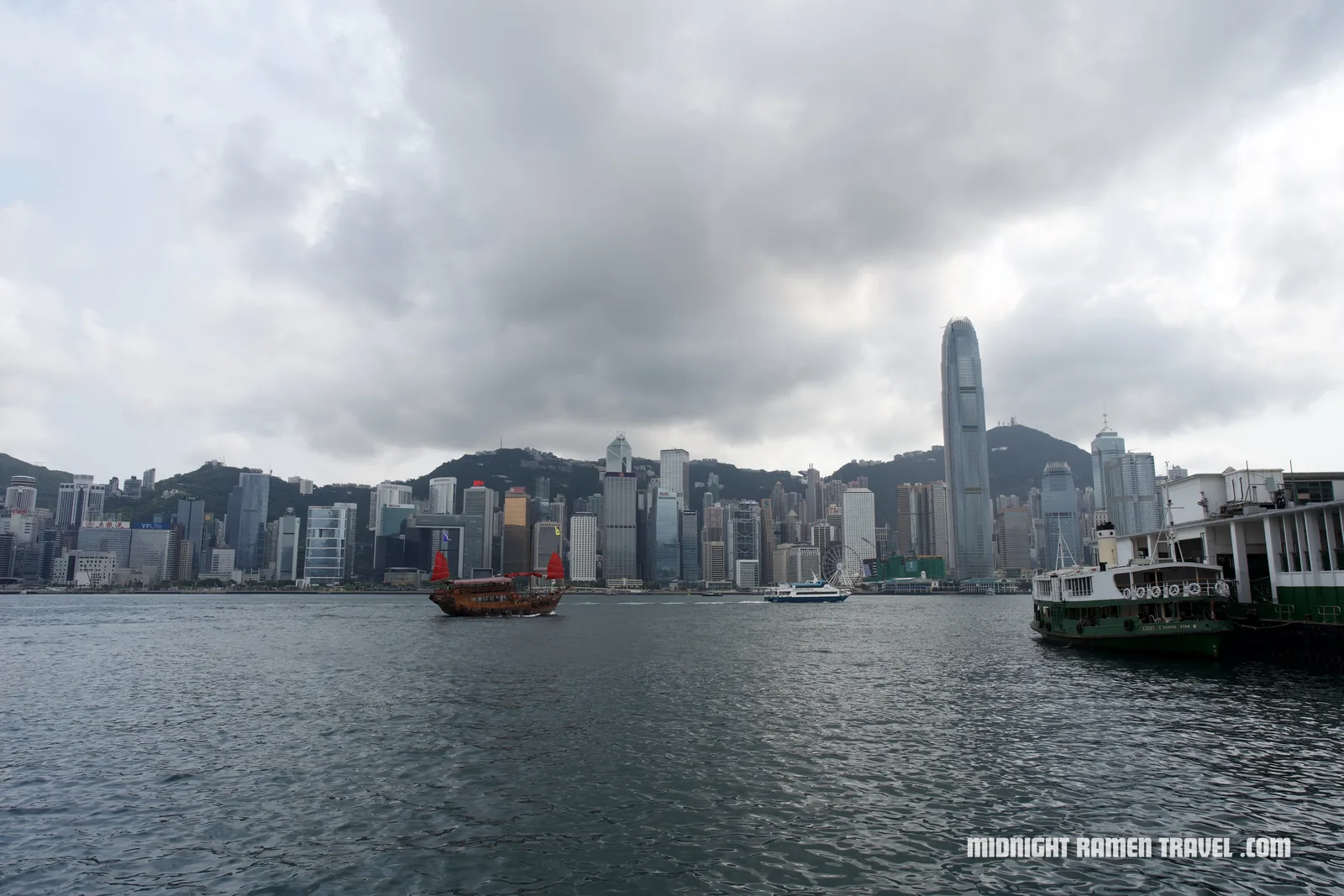
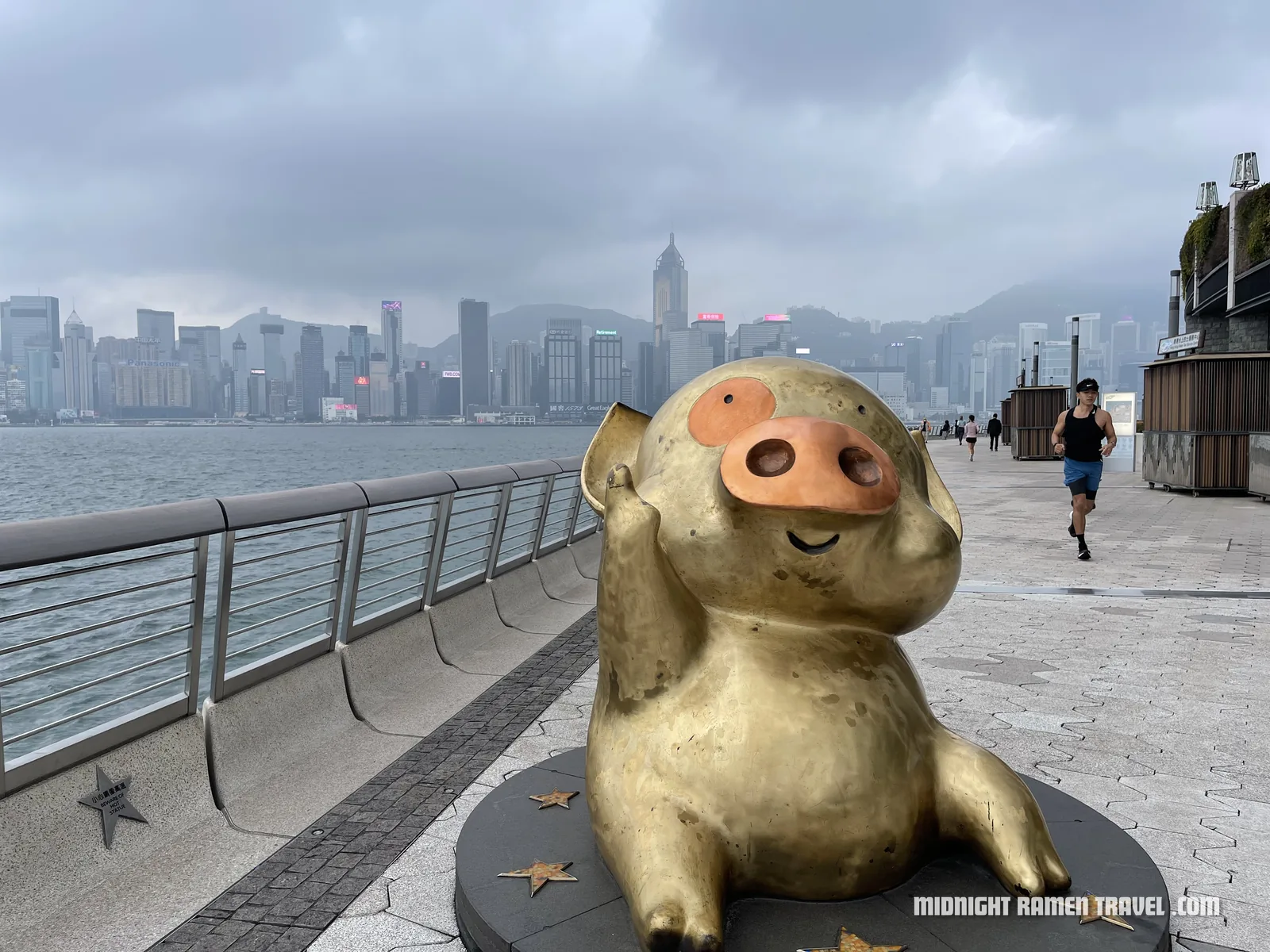
After breakfast, head to the Tsim Sha Tsui Promenade and Avenue of Stars for your first proper look at Hong Kong: the harbour right in front of you and the Island skyline rising across the water. It is one of the best opening views in the city and the natural place to start before crossing over. You will be back on this waterfront tomorrow night on Day 2 for the lit-up, after-dark version, so treat this as the daytime first look.
Opening hours: The waterfront promenade is always accessible.
Cost: Free.
Web: Tsim Sha Tsui Promenade
Estimated time: 30 minutes.
Getting there: Tsim Sha Tsui or East Tsim Sha Tsui MTR Station, then walk towards the harbour.
3. Star Ferry to Central
From Tsim Sha Tsui, take the Star Ferry across to Central. It is technically just transport, but it is one of the classic Hong Kong experiences and still the best way to cross the harbour: short, cheap, scenic, and a far better introduction to the city than disappearing straight underground. Sit on the upper deck heading to Central for the best skyline angle, it is a couple of HK dollars more but worth it.

Opening hours: The Central-Tsim Sha Tsui service broadly runs from 6:30am to 11:30pm.
Cost: Adult fares are HK$4.00 lower deck / HK$5.00 upper deck Monday to Friday, and HK$5.60 lower deck / HK$6.50 upper deck on weekends and public holidays. The upper deck is worth the small premium for the view.
Web: Star Ferry timetable and fares
Estimated time: 15 minutes including boarding.
Getting there: Tsim Sha Tsui Star Ferry Pier to Central Pier 7.
4. Central, SoHo and Sheung Wan self-guided walking and food route
Central, SoHo and Sheung Wan pack in a huge amount of what makes Hong Kong so good: steep streets, polished towers beside old shopfronts, temples, bars, escalators, side lanes, and workers somehow pushing heavily loaded carts up hills I would rather not walk empty-handed. The contrast becomes clearest along Hollywood Road as you approach Man Mo Temple and continue into Sheung Wan. The polished Central city starts giving way to dried-seafood stores, traditional Chinese-medicine shops and more local shopfronts.
I think the best way to experience this area is to follow the whole walk and see what grabs you. Every stop below stays on the route, but none is compulsory. Spend longer at the places you are into, make one or two food stops rather than all of them, and keep moving past anything that does not interest you.
a. Central Market
Start at Central Market, a revitalised old wet market now full of small shops, stalls and food counters. It is a good, air-conditioned place to get your bearings before the hills begin.
Time Needed: 15 minutes
Location: 93 Queen’s Road Central / 80 Des Voeux Road Central. Open daily, shops roughly 10am to 10pm.
b. Mid-Levels Escalators
Hop on right next to Central Market on Queen’s Road Central, ride up, and hop off around the SoHo exit. It is the longest outdoor covered escalator system in the world and one of the city’s quirkier “attractions.”

Time needed: Allow about 10 min, longer if you stop to explore on the way up.
Location: Start at Queen’s Road Central beside the Central Market footbridge. The system runs downhill from 6:00am to 10:00am, pauses while reversing, then runs uphill from 10:20am to midnight. It is an 800-metre system recognised as the world’s longest outdoor covered escalator.
c. Dim Sum or Wonton noodles on Wellington Street
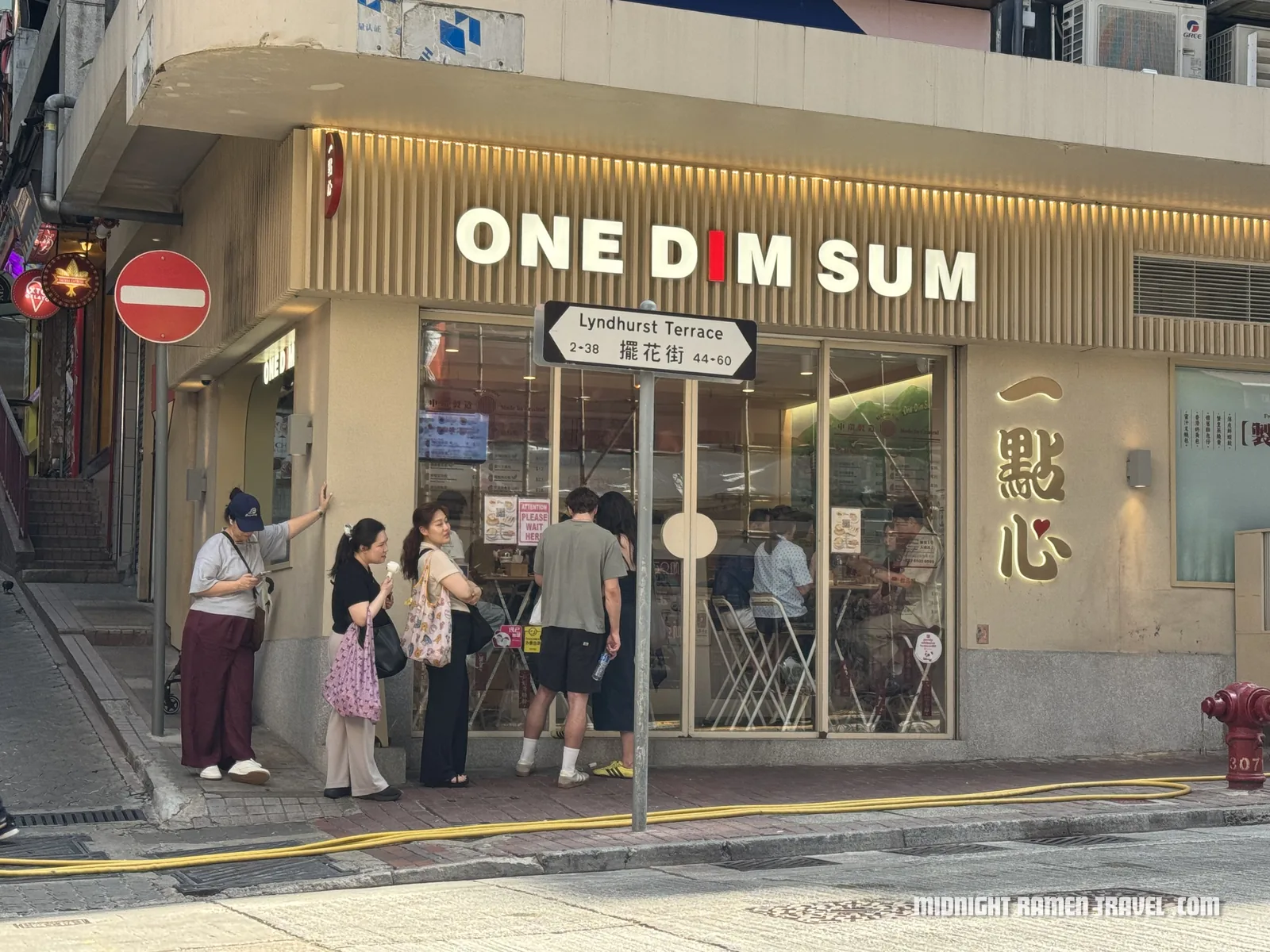
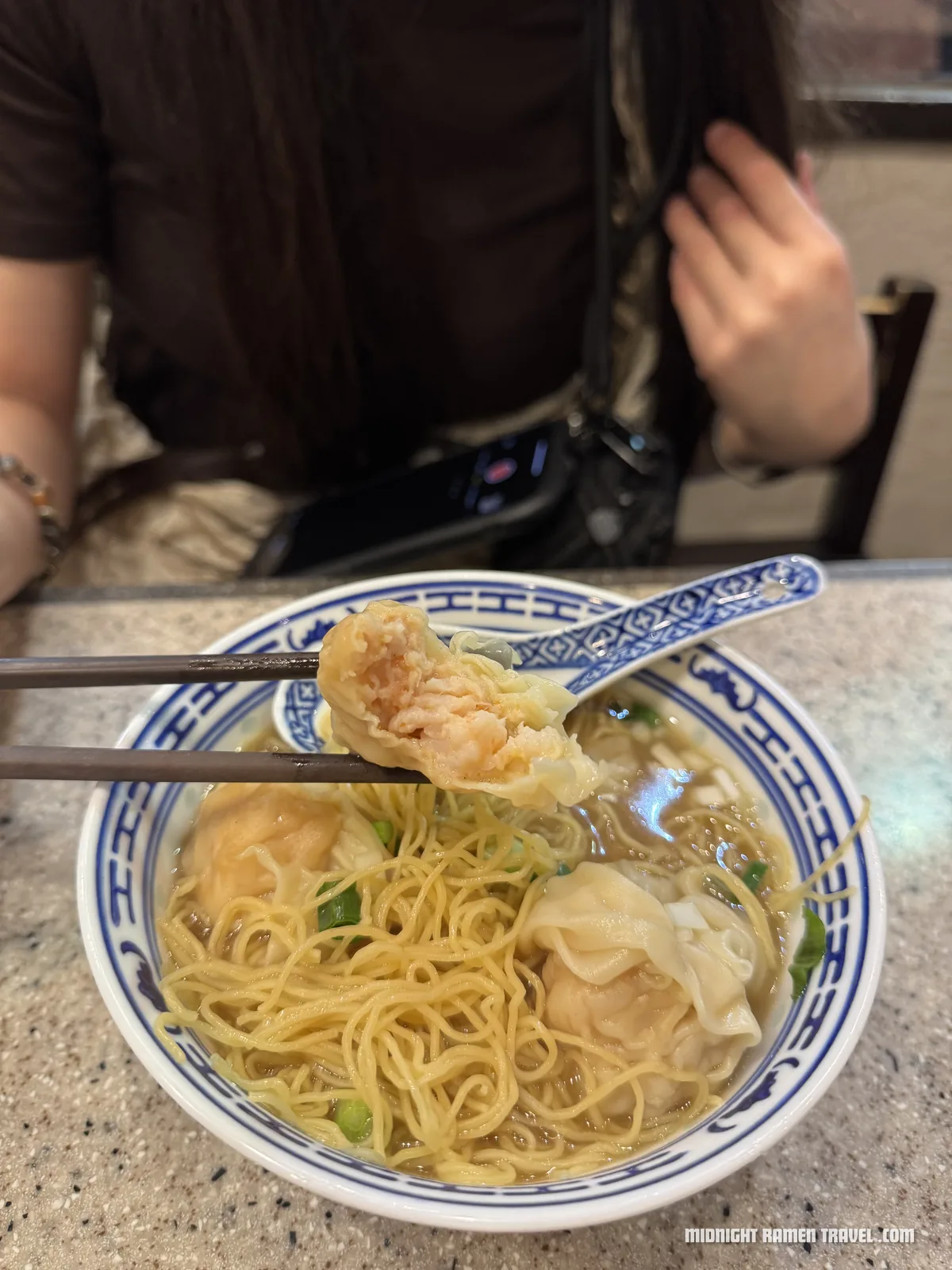
First food stop. Hop off around Wellington Street for one of Hong Kong’s signature dishes. I recommend dim sum at One Dim Sum or a bowl of wonton noodles at Tsim Chai Kee or Mak’s Noodles. If breakfast filled you up, share one between two or skip this stop. There are more food options ahead. I would lean towards the wonton noodles here, since you can get dim sum at Dim Sum Square later on the route.
Time needed: 15-20 minutes.
Location:
- One Dim Sum: 44 Lyndhurst Terrace, Central (the Central branch, a 2-minute walk from Wellington Street). The official site also lists branches at 209A-209B Tung Choi Street in Prince Edward and 4 Hart Avenue in Tsim Sha Tsui. Check same-day opening hours before relying on a particular branch.
- Tsim Chai Kee: 98 Wellington Street, Central. Open daily, roughly 9am to 9pm.
- Mak’s Noodles: 77 Wellington Street, Central (directly across from Tsim Chai Kee). Open daily, roughly 11am to 9pm.
d. Tai Kwun
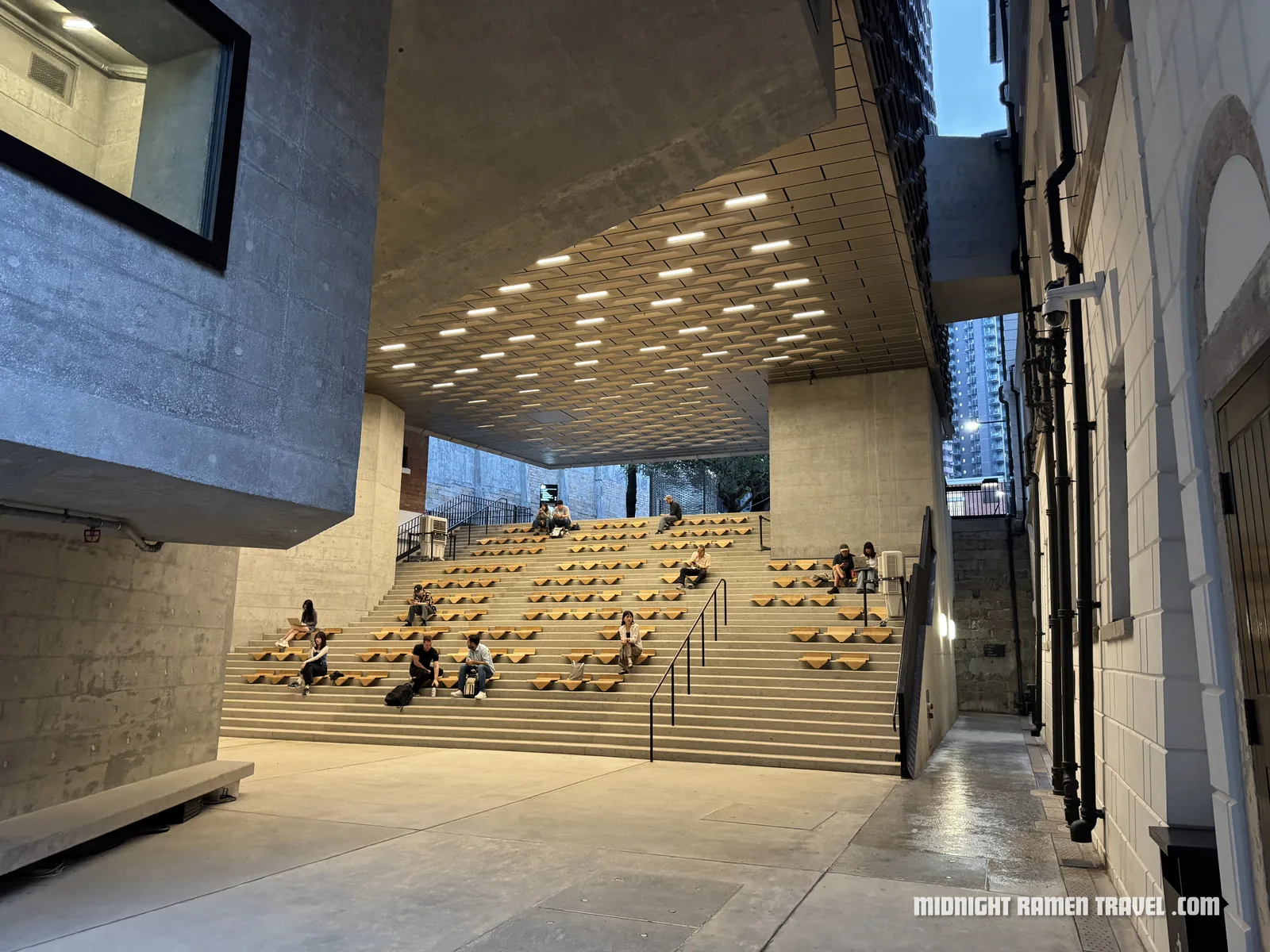
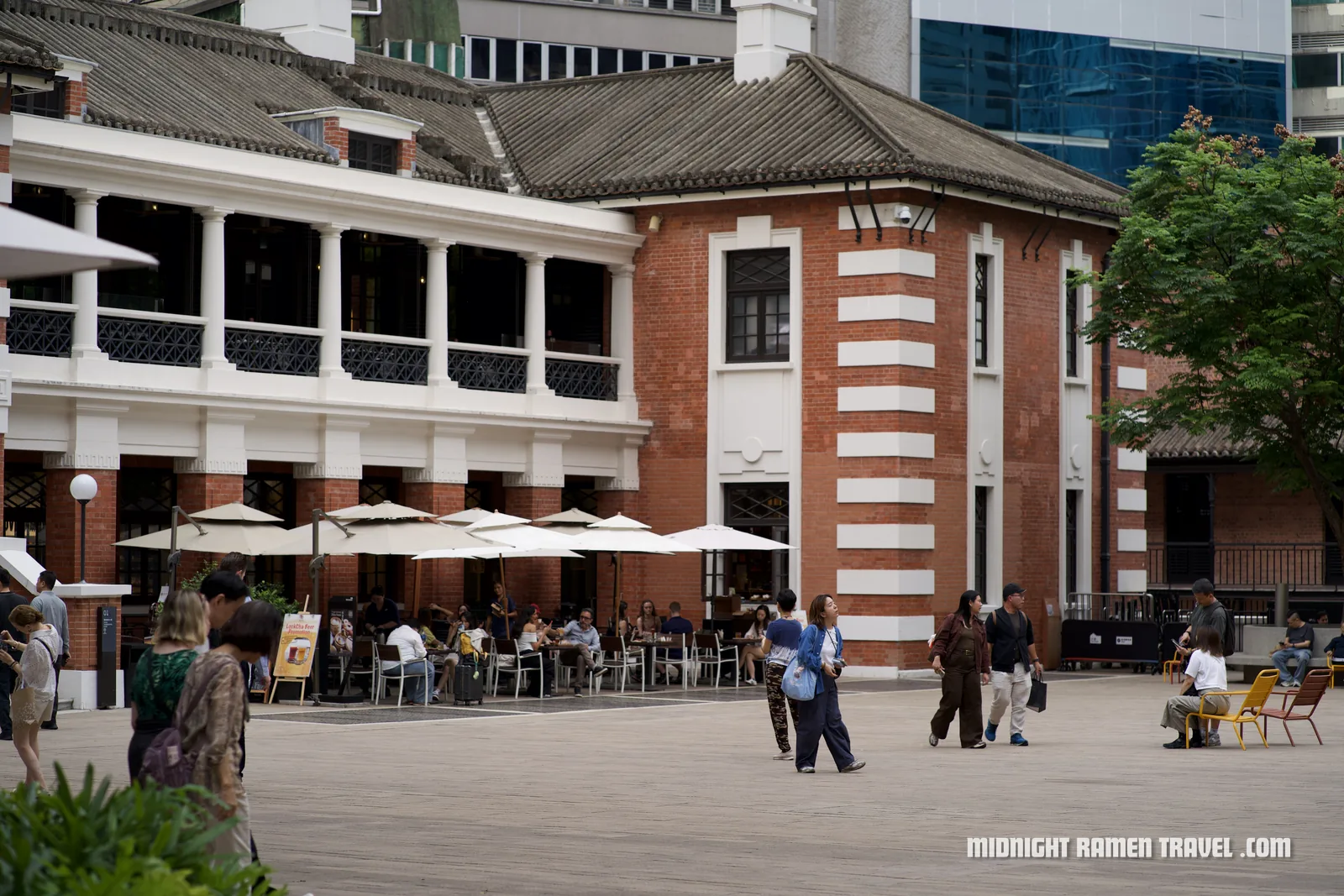
Ride the escalators a little further up to Tai Kwun, the restored former Central Police Station and Victoria Prison, now a heritage and arts complex. It is mostly free and good for a slow wander through the old cell blocks and courtyards. From here, explore SoHo and then walk down Shelley Street to Hollywood Road.
Time needed: 30-45 minutes
Location & Opening Hours: 10 Hollywood Road, Central. Grounds open daily 10am to 11pm; galleries 11am to 7pm (to 8pm at weekends).
e. SoHo
This is where Central loosens its collar, tight lanes of bars, little restaurants and galleries climbing the hillside. Wander and duck into whatever catches your eye. (If you would rather hit SoHo at night for the bars and restaurants, skip it now and come back later.)
Time needed: Allow 15 to 30 mins, depending on how much you want to explore or if you need a coffee.
f. Hollywood Road
One of Hong Kong’s best streets for antique shops, galleries, murals and weathered old shopfronts. Head west towards PMQ and take it slowly. There is something to look at the whole way.

g. Kung Lee sugar cane drink
On your way to PMQ, stop at Kung Lee, a long-running little shop for fresh sugar-cane juice and herbal tea. It is a quick, traditional pit stop right on Hollywood Road.
Time needed: a few mins.
Location: 60 Hollywood Road. Open daily, roughly 11am to 9pm.
h. PMQ
A former police married quarters turned creative hub: designers’ studios, workshops and small local brands. Worth a look if you like design.
Time Needed: 15-30 mins
Location & Opening Hours: Just up from Hollywood Road at 35 Aberdeen Street. Site open daily; most studios and shops 11am to 8pm.
i. Man Mo Temple
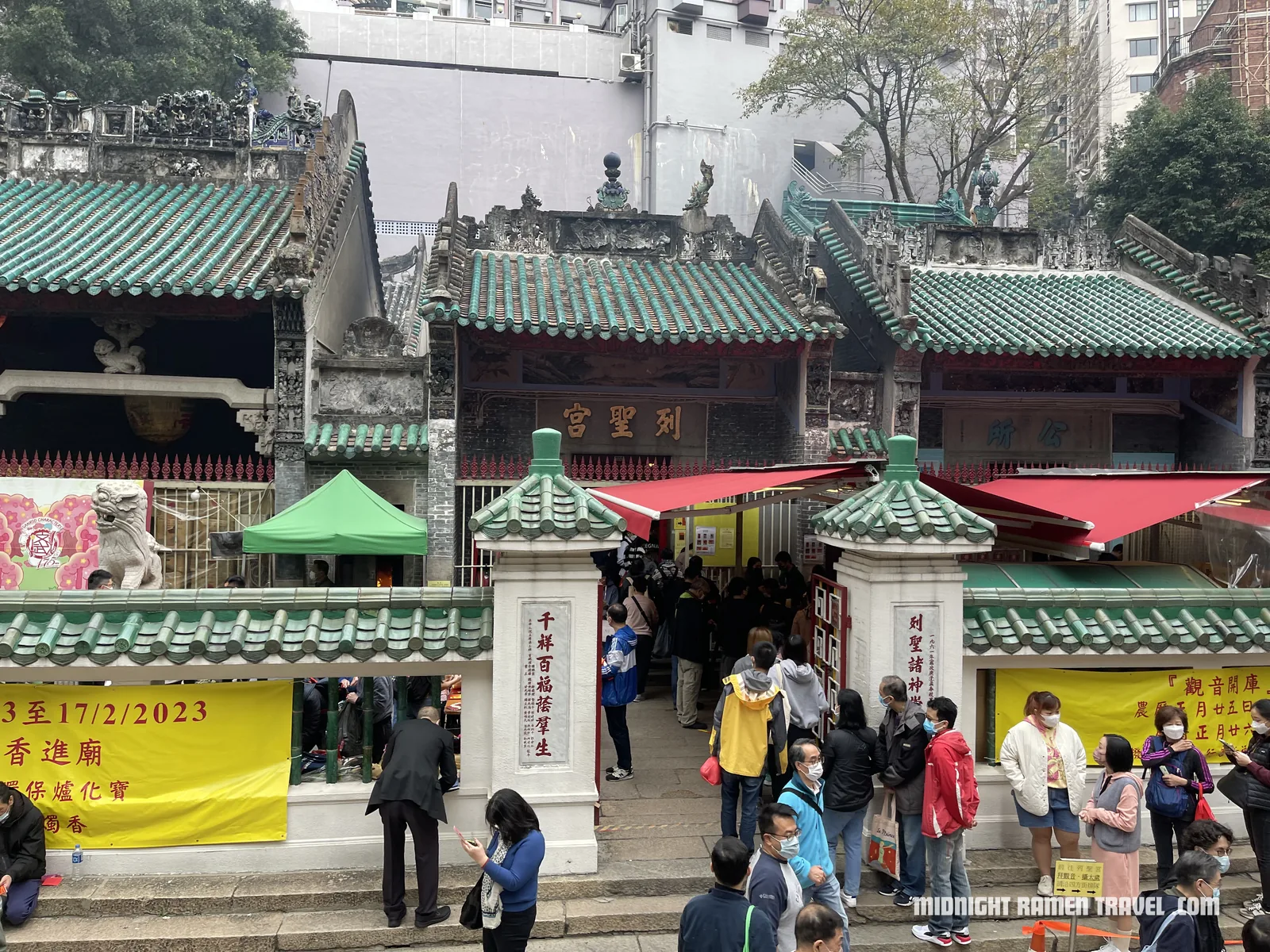
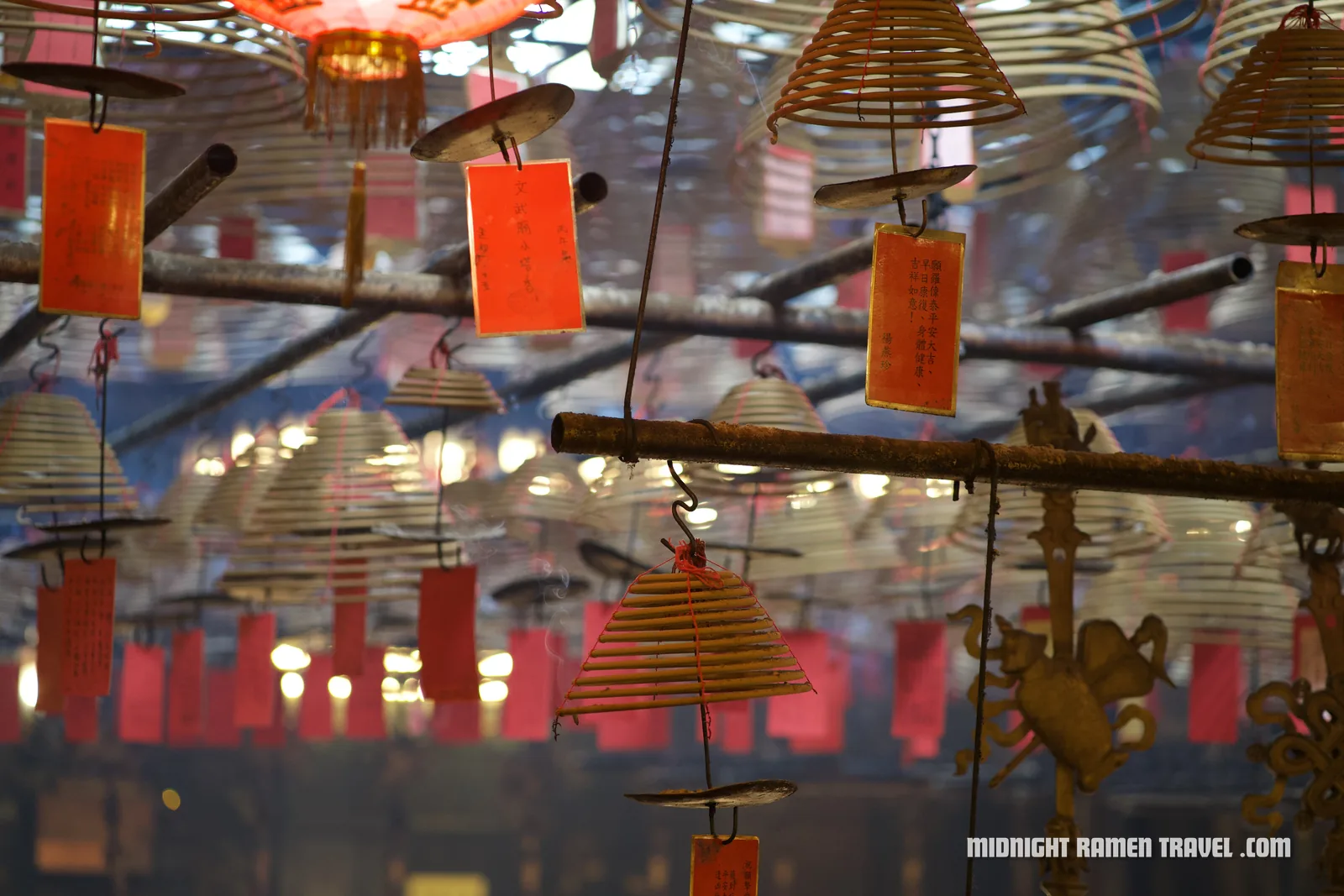
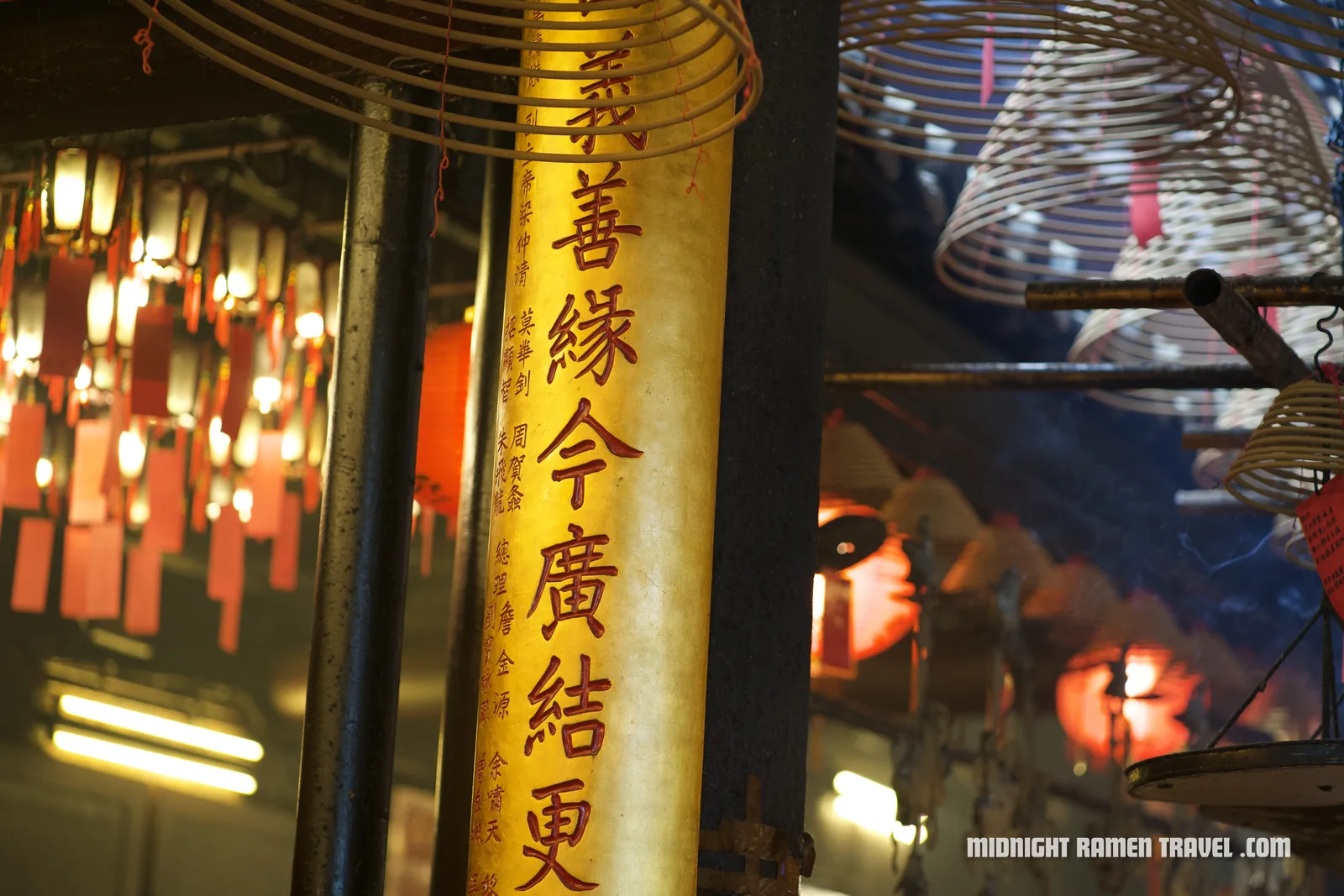
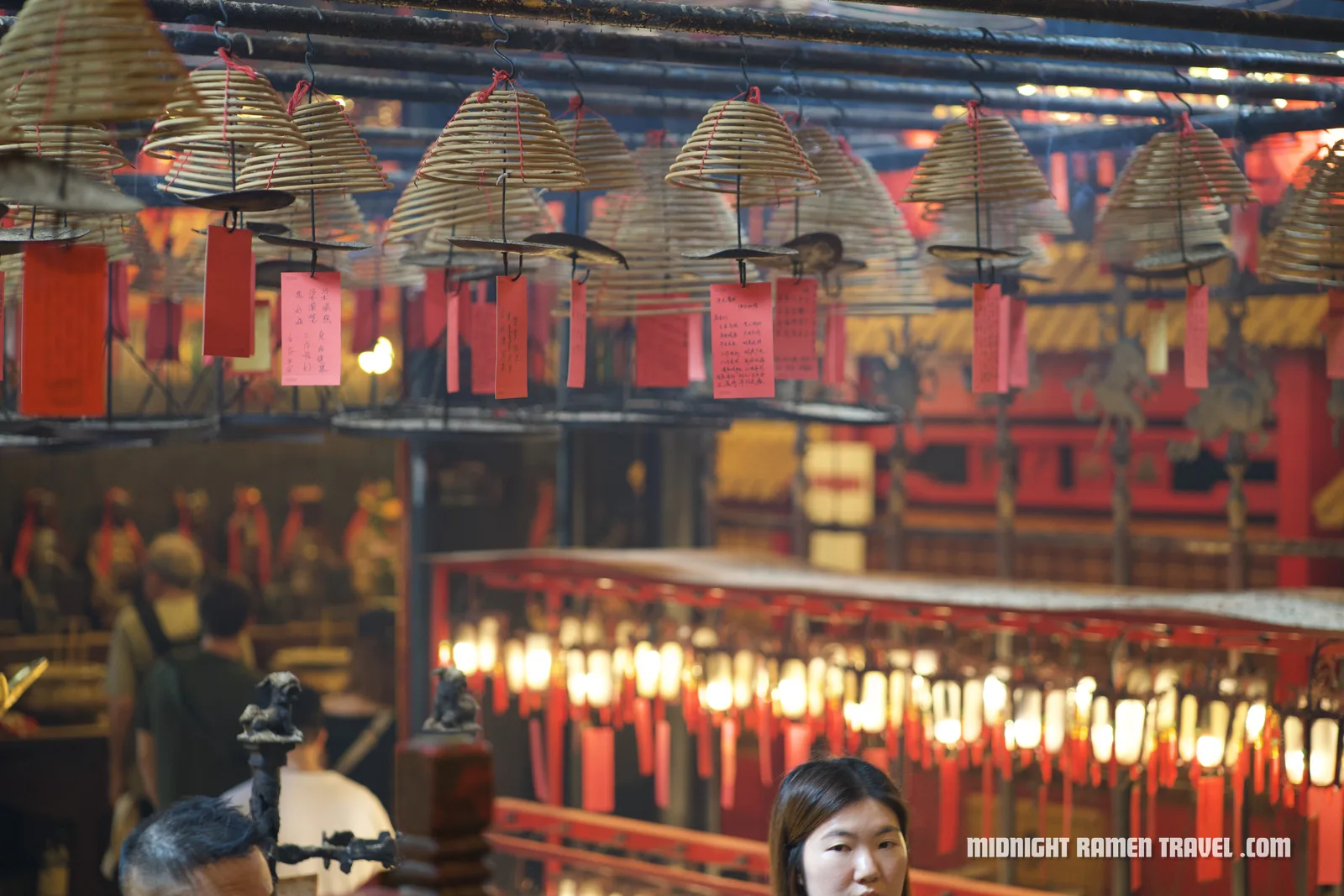
One of the oldest temples in the city, and those giant incense coils hanging from the ceiling are the whole reason to duck in. You will not need long, but it is worth the five minutes.
Time needed: Allow 5 to 10 min.
Location: 124 to 130 Hollywood Road. Open daily 8am to 6pm.
j. Cat Street Market
A short lane of antique and curio stalls, officially Upper Lascar Row, selling jade, old coins, Mao-era memorabilia and assorted bric-a-brac. Worth a browse even if you buy nothing.
Time needed: Allow 5 to 10 min.
Location: Upper Lascar Row, Sheung Wan. Stalls open roughly 11am to 6pm, quieter on Sundays.
k. Wong Wing Kee Preserved Fruits
A traditional preserved-fruits shop, the kind of old Hong Kong store that is slowly disappearing.
Time needed: Allow 5 to 10 min.
Location: Sheung Wan. Open roughly 9am to 5:30pm, closed one day a week (worth a quick check before you go, some sources say Sunday).
l. Dim Sum Square
A classic, no-frills dim sum hall, handy if you skipped food earlier or want one more round before the egg-tart finish.
Time needed: 30 minutes
Location: 78 Jervois Street, Sheung Wan. Open 10am to 10pm Monday to Saturday, 8am to 10pm Sunday.
m. Dried Seafood Street and Tonic Food Street
A cluster of streets (mainly Wing Lok Street, plus Des Voeux Road West and Bonham Strand West) that make up one of Hong Kong’s most famous dried-seafood and traditional-medicine areas. Even if you buy nothing, the smells and shopfronts are the experience.
Time needed: Allow about 15 minutes to wander past and go inside a couple stores.
Location: Des Voeux Road West, Wing Lok Street and Bonham Strand West. Shops open daytime, many closed on Sundays.
n. Hei Lee Cake Shop
Finish the walk with an egg tart. You will have earned it by now.
Time needed: A few mins.
Location & Opening Hours: 144 Bonham Strand, Sheung Wan. A tiny bakery that sells out fast and doesn’t post reliable hours online, go before early afternoon, and like most Bonham Strand shops, it’s likely closed on Sundays.
5. Afternoon: Reset, then time The Peak for sunset
By now you have earned a breather. A few options depending on energy:
- Quick hotel reset if you are staying nearby in Central.
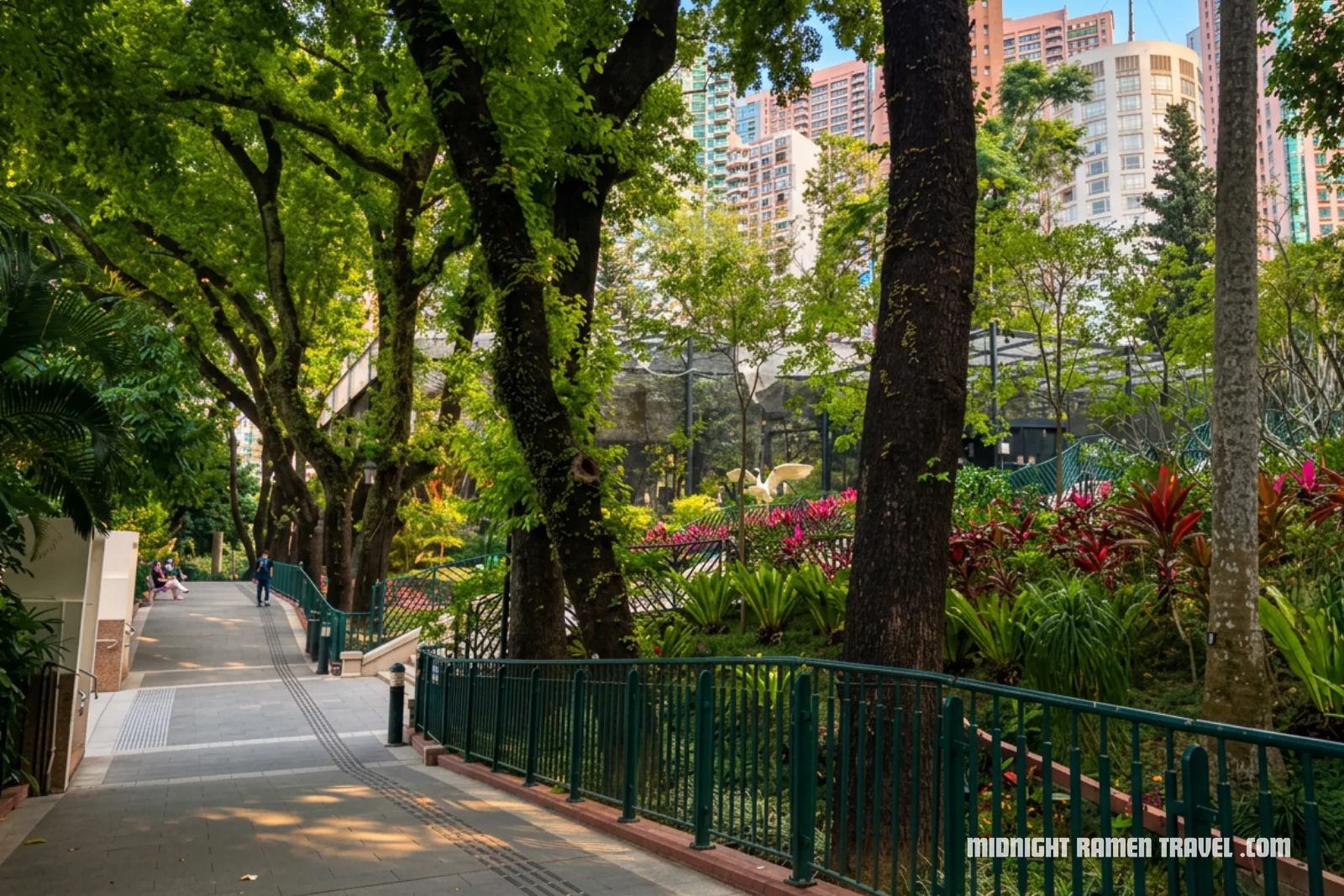
- Slow it down in Hong Kong Park before heading up.
- (My pick) Head straight up to The Peak and use the spare time for the Peak Circle Walk before the views.
The goal is to be up The Peak about an hour before sunset.
The Peak Tram can get very busy, especially if you still need to queue for tickets. Pre-book if you want to remove one delay from an already full day.
6. The Peak
Late afternoon into early evening is exactly when to do The Peak, when the city shifts from daylight to sunset to night. Take the Peak Tram up, do the Peak Circle Walk while it is still light, then find a spot for the main event. Watching Hong Kong light up from up here is hard to beat.
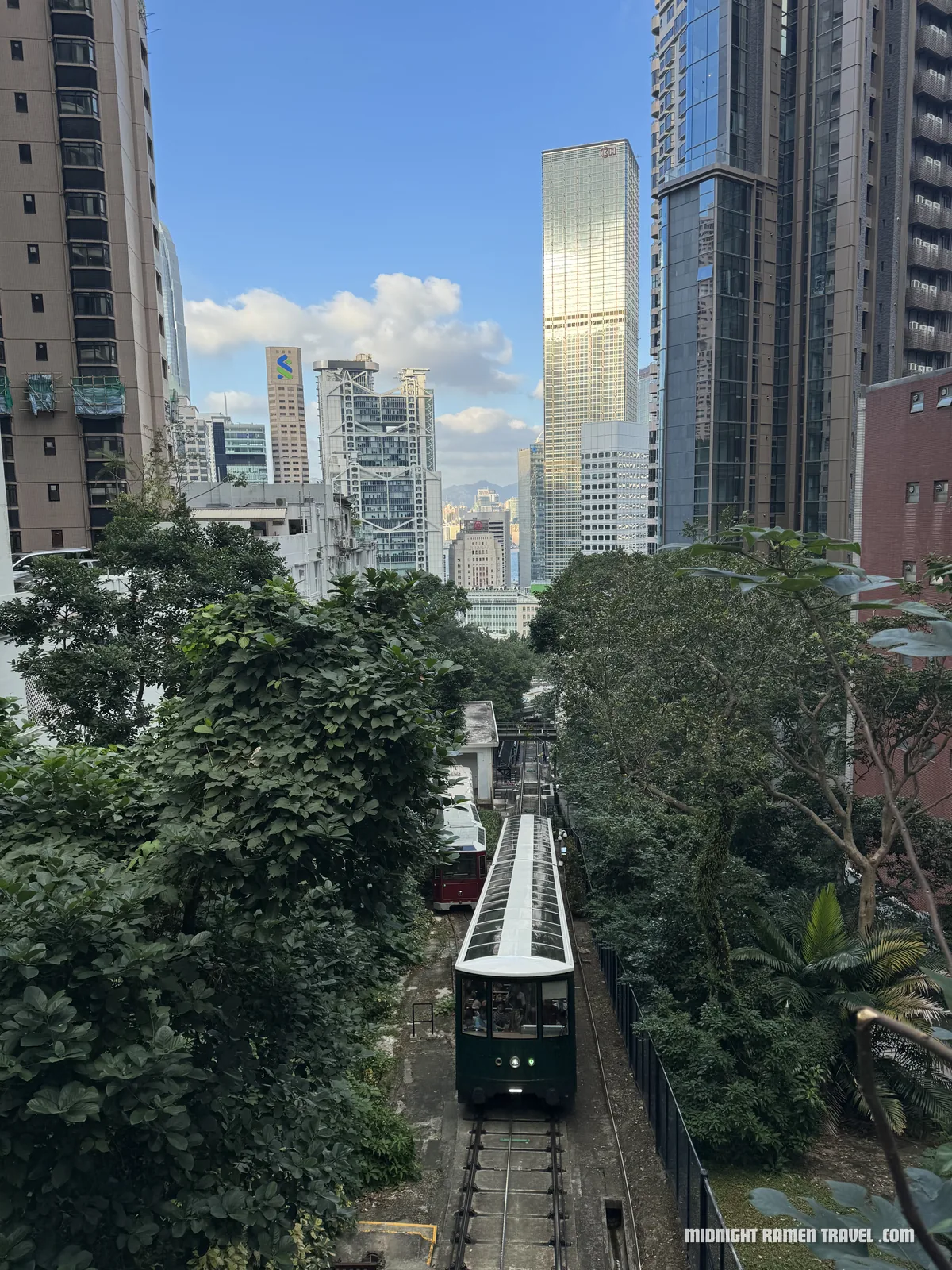
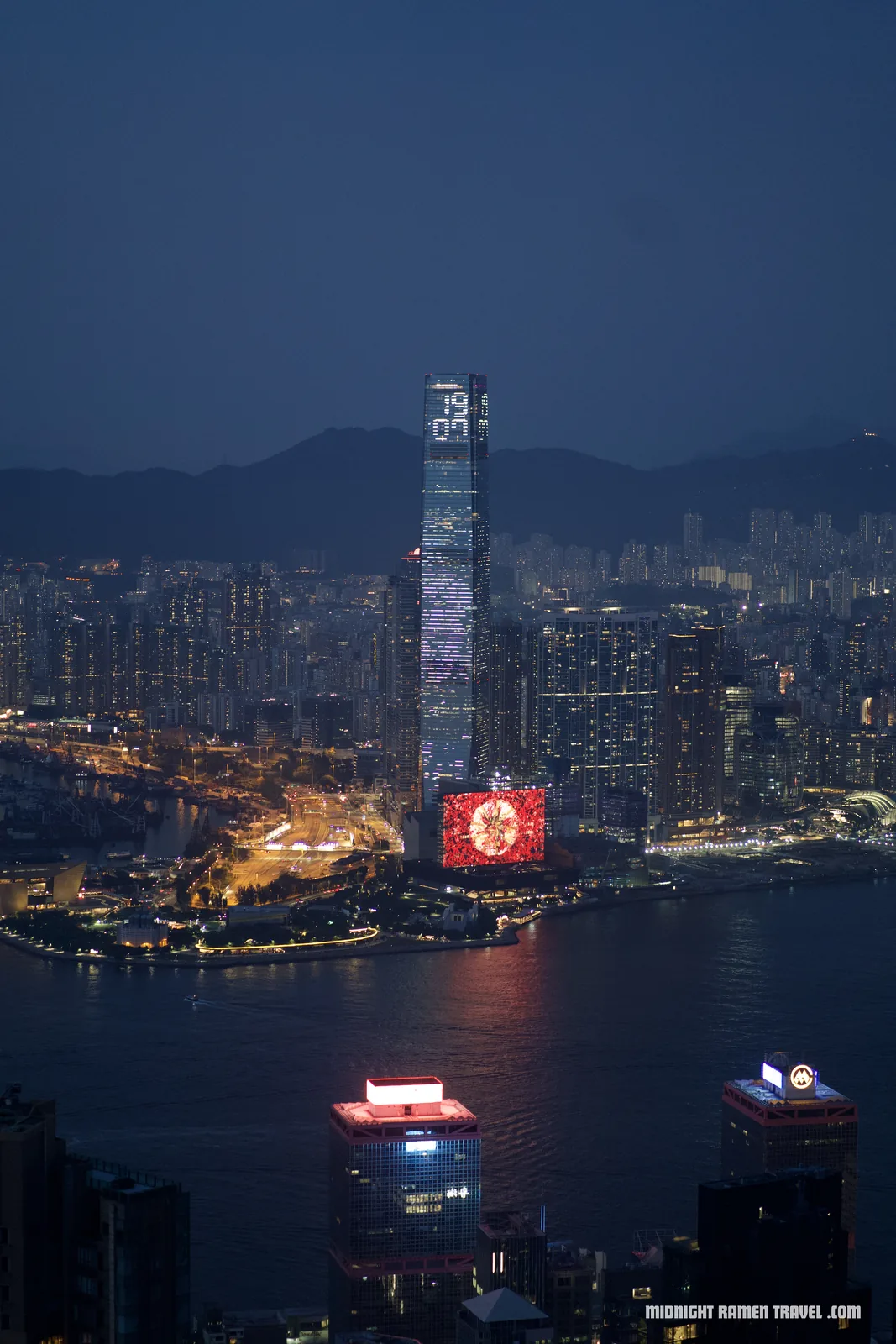
My favourite unrestricted photo angle is on the eastern side around Findlay Road. After leaving the Peak Tower, go outside and take the side opposite the start of the Peak Circle Walk. You come to a public viewing area that is separate from Sky Terrace 428, with unrestricted views if there aren’t too many people. Otherwise, there are beautiful viewpoints all along the Circle Walk.
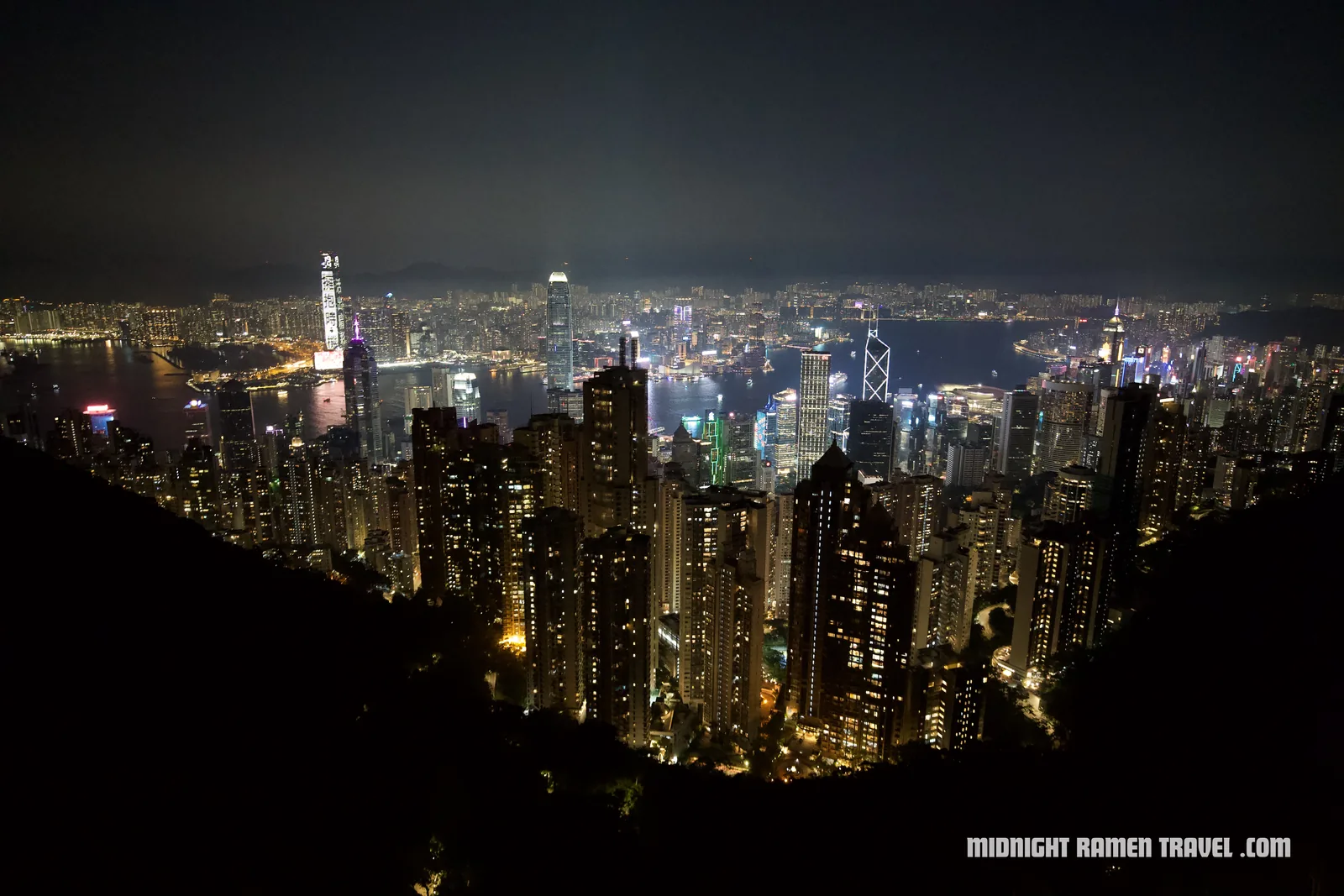
In my opinion, you do not really need to pay for Sky Terrace 428. It is the highest viewing platform, but the Peak Circle Walk and surrounding terraces have views that are just as good. Sky Terrace can also get crowded for what is only a marginal upgrade.

Opening hours: Peak Tram 7:30am-11:00pm daily, generally every 10-15 minutes. Sky Terrace 428 opens 8:30am-10:00pm.
Cost: Peak Tram HK$82 single or HK$116 return for adults. An adult single tram and Sky Terrace combination is HK$146.
Web: The Peak and Peak Tram
Estimated time: 2-3 hours including the Circle Walk and sunset.
Getting there: Peak Tram lower terminus, 33 Garden Road, Central.
→ Click HERE to check current prices and book the Peak Tram
Evening: Ding Ding tram and Causeway Bay
7. Ride the Ding Ding tram east
Head back down from The Peak and jump on a Ding Ding (the double-decker trams) heading east towards Causeway Bay. You roll through Wan Chai on the way, so hop off for a wander if it grabs you. When you jump on, enter from the back and head upstairs for the best views.
Note: if you are walking down from the Peak to the tram stop, there is a great photo spot from the Garden / Queen’s Rd bridge. The exact location is here (Google Maps).
Opening hours: Trams run from early morning until around midnight, with exact first and last services depending on the route.
Cost: HK$3.30 per adult regardless of distance. Board at the rear and pay when leaving through the front.
Web: Hong Kong Tramways routes and fares
Estimated time: 20-30 minutes to Causeway Bay depending on traffic.
Getting there: Walk downhill from the Peak Tram terminus to an eastbound stop on the Central tram corridor, then board a tram showing Causeway Bay, North Point or Shau Kei Wan. Use the official map for the nearest live stop.

8. Causeway Bay: people-watching, malls and dinner
Causeway Bay comes alive at night. I would start around the busy Hennessy Road / Yee Wo Street intersection for the classic crossing photo and some people-watching, then explore whatever street, stall or mall pulls you in. This bit is about soaking up that dense Hong Kong Island energy.
Malls worth a look:
- Times Square: the classic big-name Causeway Bay mall, busy and central. Good for first-timers and mainstream shoppers.
- Hysan Place: a modern vertical mall with a younger, more current feel. Good for a food and fashion mix.
- Lee Gardens: a more upscale, spread-out luxury cluster, without the same tourist crush.
- SOGO: an old-school Hong Kong retail institution and a real landmark.
- Most of these open around 10am to 10pm, a little later on weekends.
For dinner along the way:
- Wing Kee, Shop CF4 in Bowrington Road Market and Cooked Food Centre, 21 Bowrington Road. This is the cooked-food-centre option I would choose. I do not have one compulsory dish here; the point is to order what appeals and enjoy the cooked-food-centre experience. The floor is variously translated as 1/F and second floor, so follow the CF4 stall number rather than relying on the English floor description. It is an evening stop, but check same-day hours before going.
- Sister Wah for beef brisket noodles. A bit further east, it is at Shop A1, 13 Electric Road in Tin Hau and currently opens daily from 11:00am to 10:45pm. It is more towards Tin Hau, but well worth it. I also recommend getting a sesame ice cream from Heartwarming for dessert next door. If you do, you can stroll through Victoria Park on your way.
- Paradise Dynasty if you want something a bit fancier.
9. Cap it off
If you are not done yet:
- A drink around Causeway Bay, or back over in SoHo.
- An Island-side harbourfront stroll.
- A Hong Kong-style dessert to finish.
- Find a speakeasy.
Day 2 - Kowloon
Day 2 gives you a very different side of Hong Kong from yesterday’s Central, SoHo and Peak route. This is the Kowloon day: a little less polished, a little more chaotic, and much more street-level, moving from peaceful gardens and old city history into markets, neon, food stalls and the harbour skyline after dark.
Morning: Parks and gardens before it gets busy
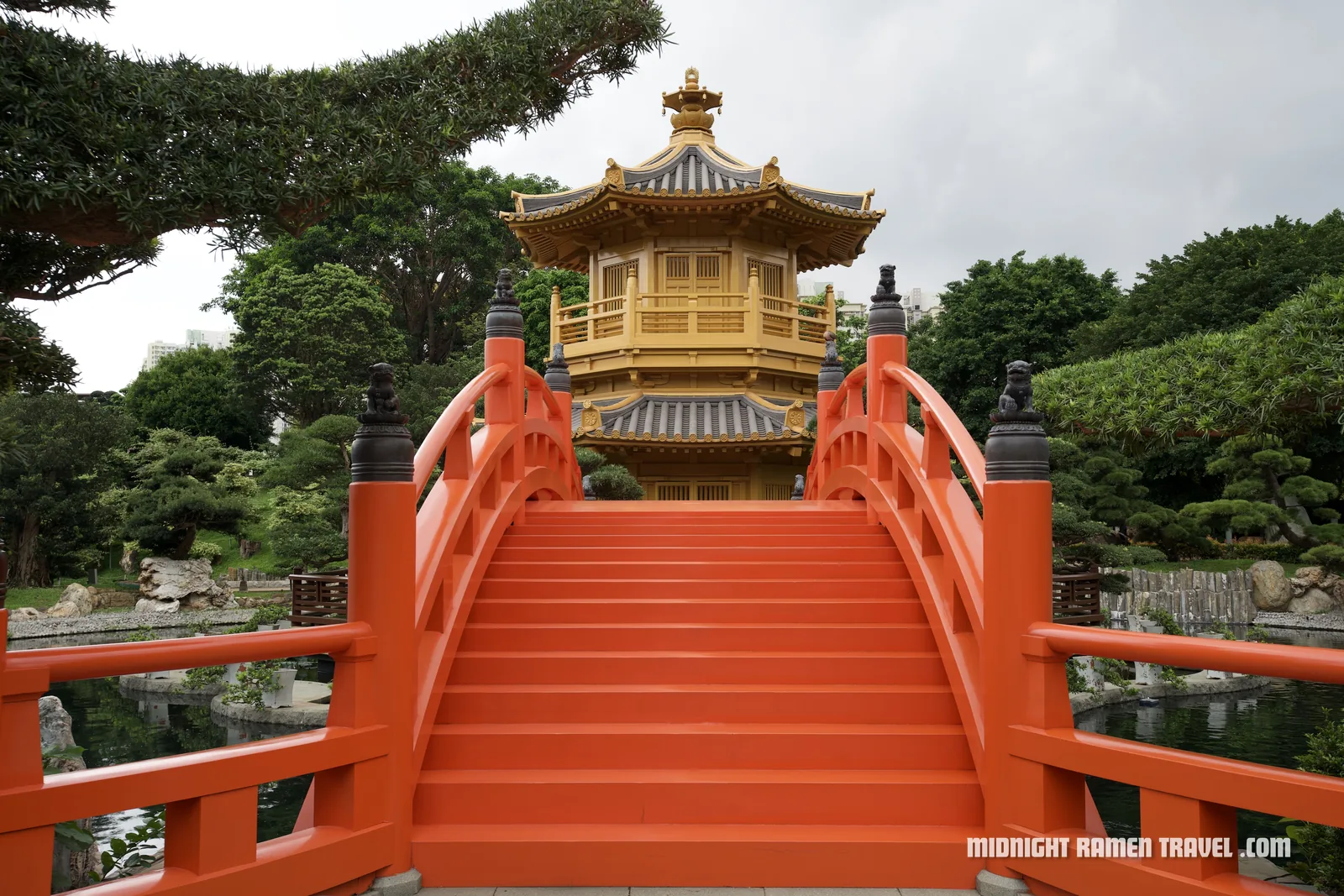
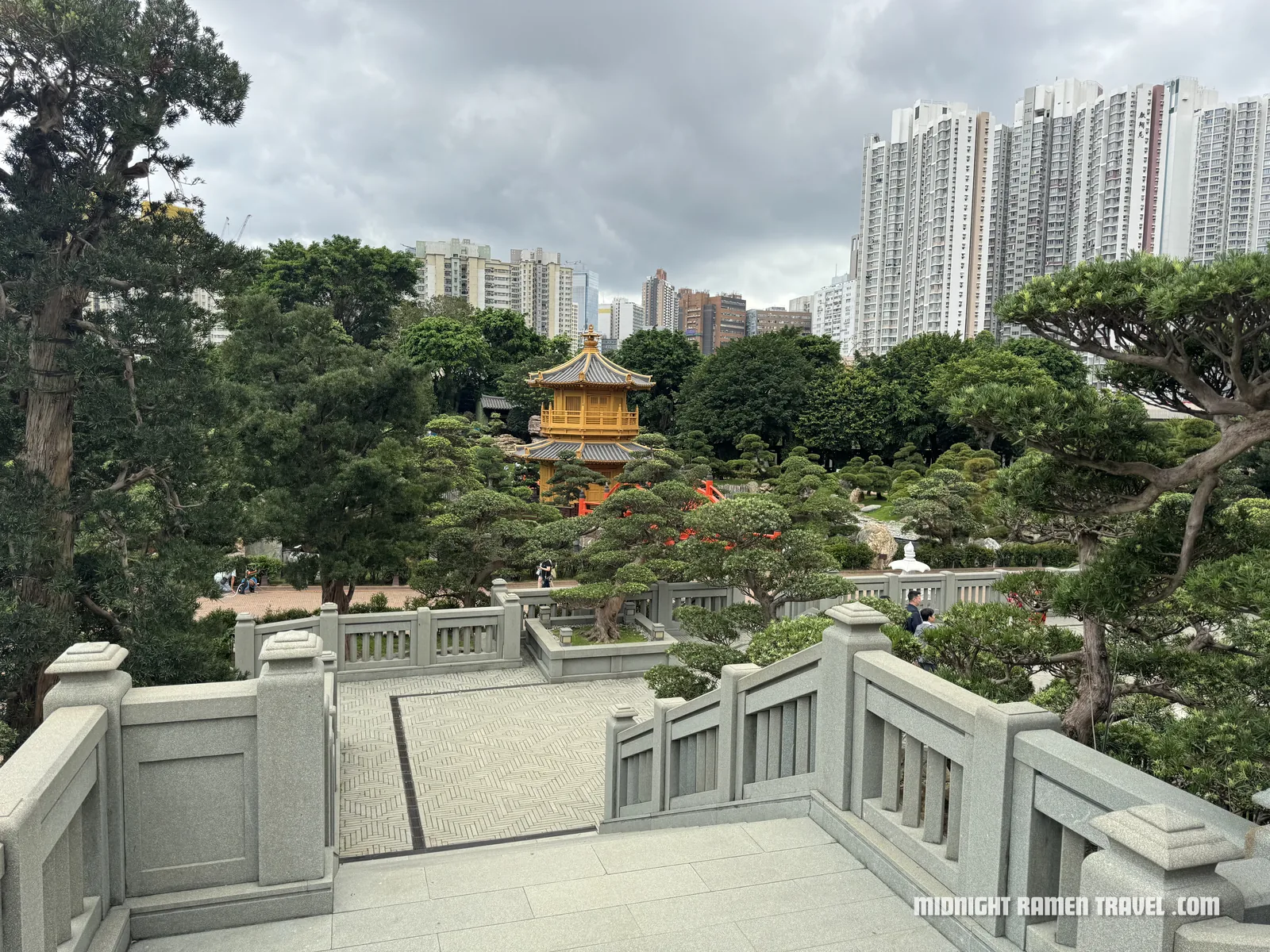
1. Nan Lian Garden
Start Day 2 at Nan Lian Garden, one of the most beautifully designed public spaces in Hong Kong: a Tang-style classical garden of ornamental ponds, manicured pines, rock arrangements and dark timber pavilions, all laid out with a precision that makes most city parks look accidental. The first reveal is the memorable bit for me. You walk up from the road, reach the top of the stairs and suddenly see these immaculate gardens sitting against the crazy city behind them.
It is next door to the Chi Lin Nunnery, so do the two together. It is a calm way to open the day before things get busier.
Opening hours: Nan Lian Garden 7:00am-9:00pm daily; Chi Lin Nunnery 9:00am-4:30pm.
Cost: Free.
Web: Nan Lian Garden
Estimated time: 1 hour for the garden and nunnery together.
Getting there: Diamond Hill MTR Station, Exit C2, then a few minutes on foot to 60 Fung Tak Road.

2. Photo spots: Ping Shek and Choi Hung
Ping Shek Estate and Choi Hung Estate, two of Kowloon’s most photographed housing estates, are both a short hop from Diamond Hill. They are worth the detour if you are into urban or architectural photography. Go early for better light and fewer people, and remember that these are still residential estates, so keep it low-key.
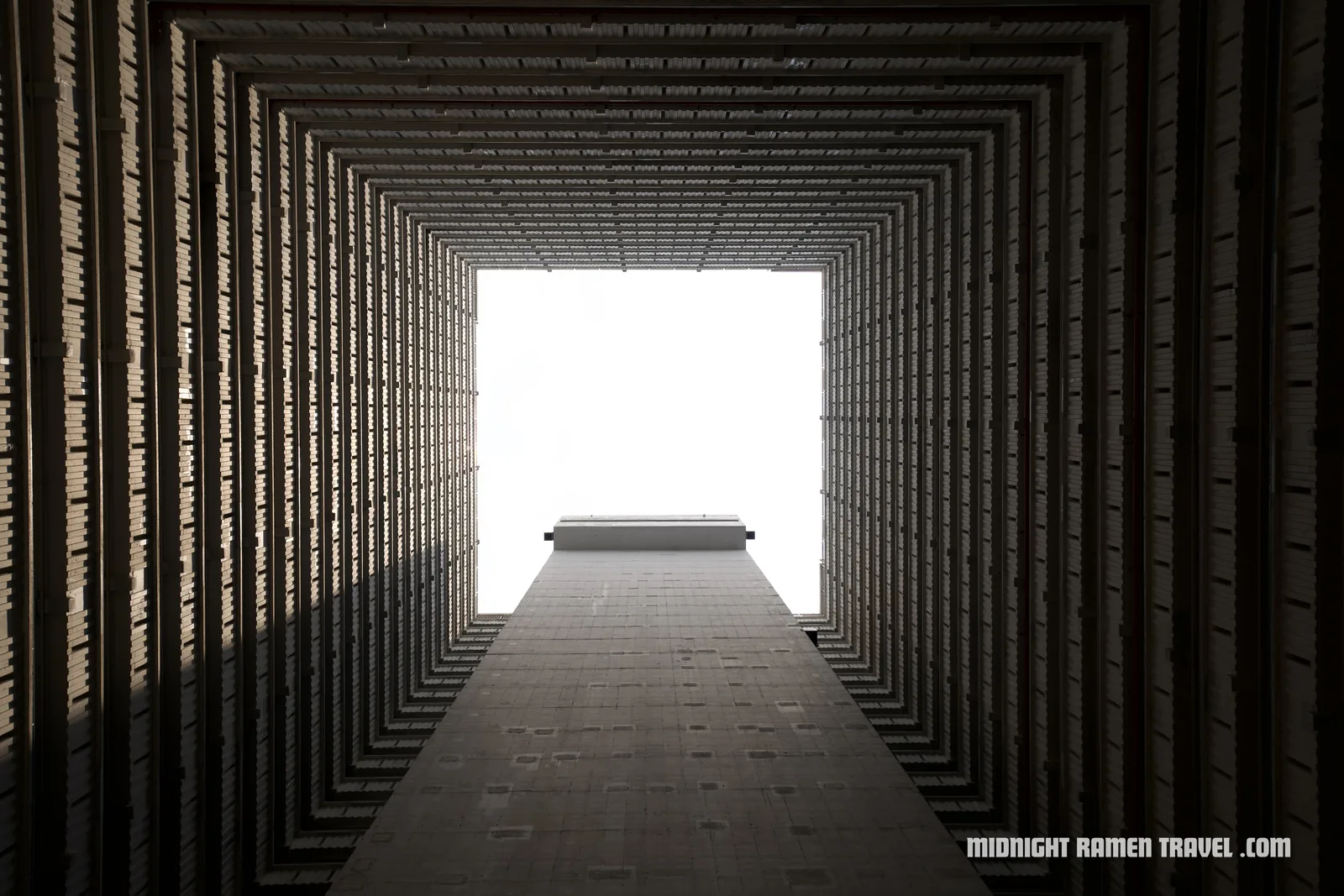
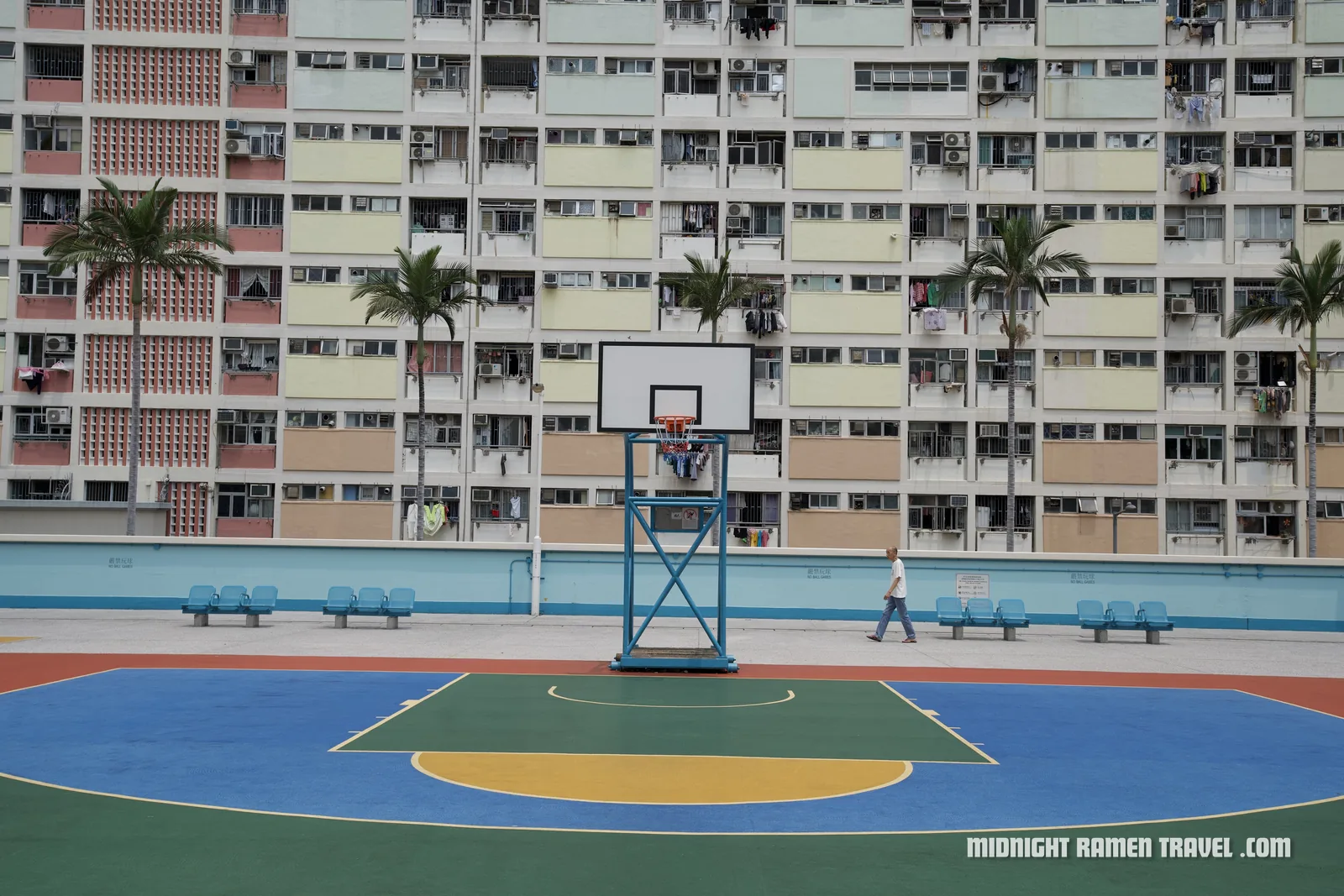
Opening hours: Visit during daylight and respect residents.
Cost: Free.
Estimated time: About 10 minutes at each estate, plus transport time.
Getting there:
- Ping Shek Estate: near Choi Hung MTR (Kwun Tong line, one stop from Diamond Hill). The shot is the square central courtyard, looking straight up.
- Choi Hung Estate: 2 Tse Wai Avenue, Ngau Chi Wan. MTR Choi Hung, Exit C3 or C4. The rainbow shot is on the rooftop of the multi-storey car park, above the basketball court. Free and open public space, but go in the morning for the best light and fewest people.
3. Kowloon Walled City Park
A short hop away is Kowloon Walled City Park. For me, this stop is more about the history than the park itself. The site was once home to the Kowloon Walled City: a dense, chaotic, almost lawless settlement that became one of the most crowded places on earth. It began as a Qing-era military outpost, but by the late 20th century it had become famous for its maze-like buildings, overcrowded conditions and wild reputation.
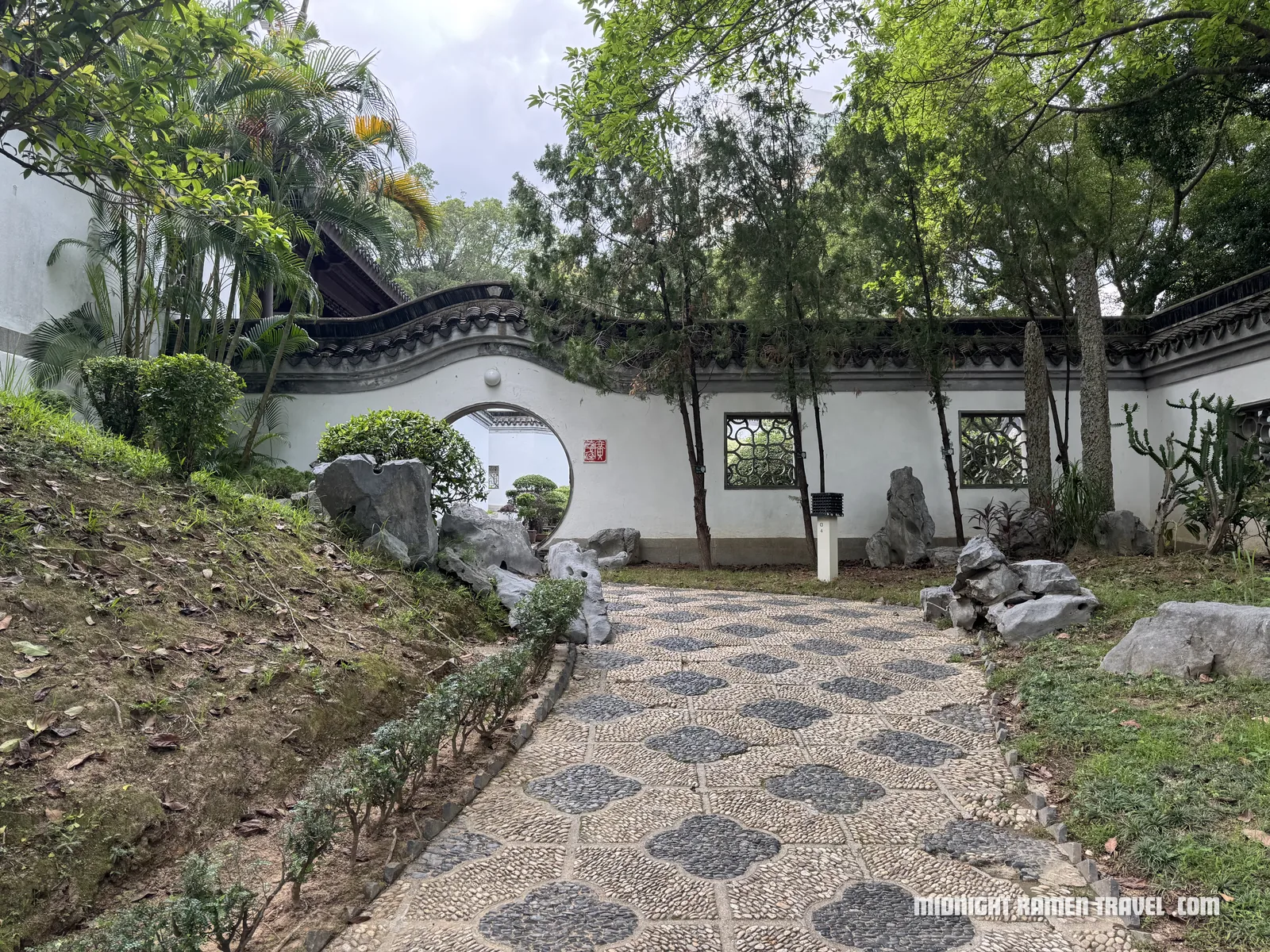
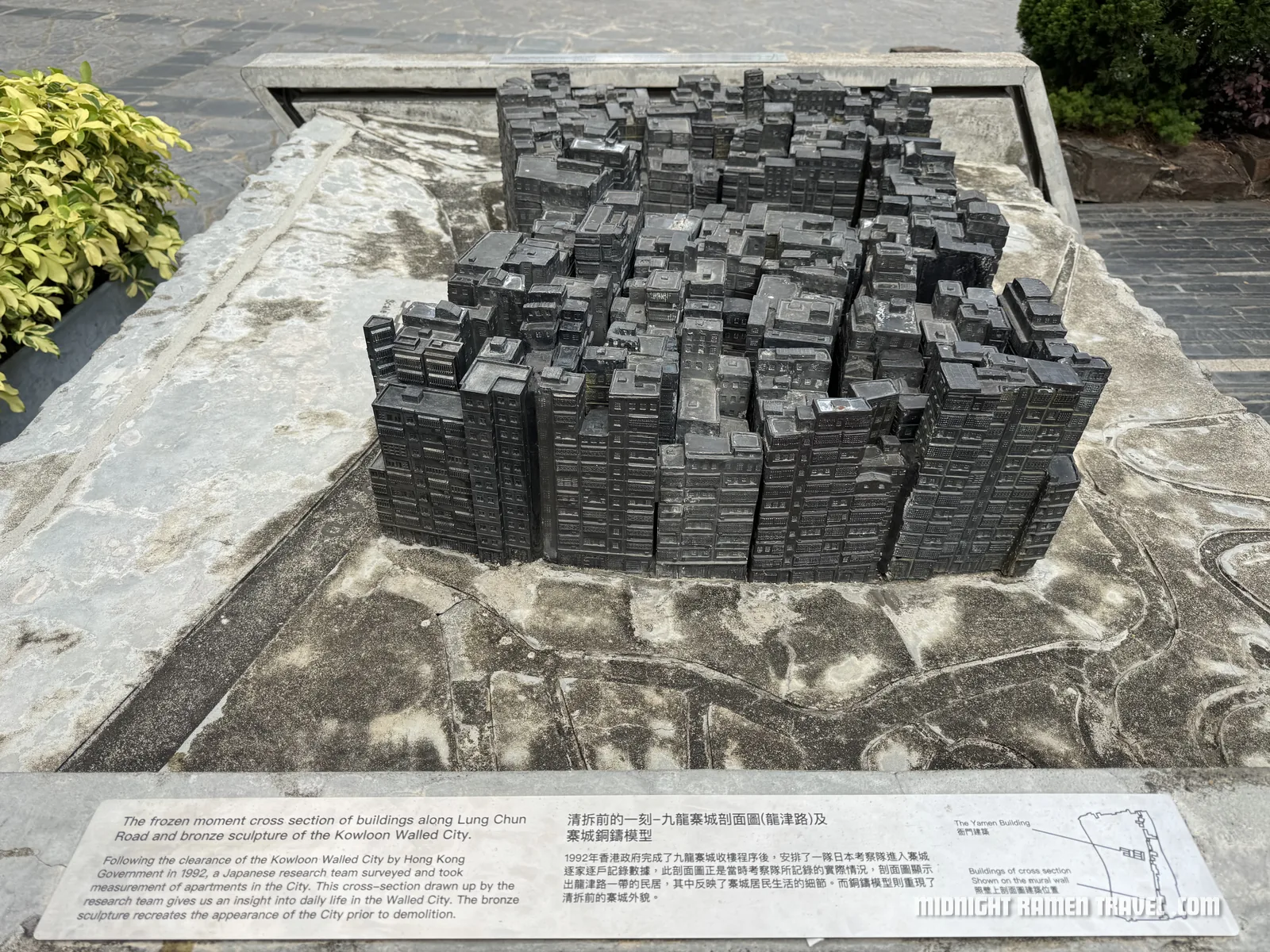
The Walled City was eventually cleared, and the park that stands there now opened in 1995. Today it is peaceful, green and polished, with surviving fragments like the Old South Gate, the restored Yamen building, a bronze scale model of the former city, and the “A City of Thousand Faces” exhibition, which gives you a better sense of what life inside was actually like.
For me, this is probably not an essential stop if you are short on time. The park itself is pleasant, but nowhere near the level of Nan Lian Garden, so I would mainly include it if you are interested in Hong Kong history or checking out the more local area around it.

Opening hours: Park 6:30am-11:00pm daily; Yamen exhibition 10:00am-6:00pm, closed Wednesday.
Cost: Free.
Web: Kowloon Walled City Park
Estimated time: 45 minutes to 1 hour.
Getting there: Tung Tsing Road, Kowloon City. Use Sung Wong Toi MTR Station, Exit B3, or take a short taxi or bus from Diamond Hill.
Midday & afternoon - Mong Kok and Yau Ma Tei markets and street food
4. The Mong Kok and Yau Ma Tei market crawl
Now the day flips. This stretch is dense, loud, chaotic and very Hong Kong. It is the heart of Day 2. Start at the north end and wander south through the full route, spending more time at the markets that interest you and treating the smaller stops as quick looks. Eat small and often as you go.
My personal preferences are the Flower Market and Goldfish Market, and, for a more typical Hong Kong tourist street market, the Ladies’ Market. The Bird Garden is tiny, but it sits naturally on the route and takes only a couple of minutes.
The main options, roughly north to south:
- Flower Market, a whole street of nothing but florists. Roughly 7am to 7:30pm.
- Bird Garden, a tiny traditional garden where locals bring their songbirds. Treat this as a quick look, not a major stop. Daily 7am to 8pm.
- Goldfish Market, rows of bagged-fish shopfronts. From late morning, roughly 10:30am to 10pm.
- Ladies’ Market, for cheap everything. Daily 12:30pm to 11:30pm, best after 7pm.
- Fa Yuen Street / Sneakers Street, clothes, food and trainers. Shops midday to evening.
A route that works: hop off at Prince Edward, do the Flower Market, drift down through the Goldfish Market and Ladies’ Market grabbing street food along the way, and keep heading south.
For lunch, do not overthink it. A proper sit-down option is Mui Kee Congee in the Fa Yuen Street cooked-food centre, known for Cantonese-style fish congee. Check its current listing before going because cooked-food-centre stall details and hours can move. I cannot remember one specific street-food stall well enough to call it a personal favourite, so the other option is to follow the busy stalls and choose something local: curry fish balls, siu mai, egg waffles, or deep-fried squid.
Opening hours: Individual markets vary; the route is liveliest from late morning into evening.
Cost: Free to wander, plus whatever you eat or buy.
Web: Hong Kong street markets
Estimated time: 2-3 hours including lunch.
Getting there: Start at Prince Edward MTR Station and finish around Mong Kok or Yau Ma Tei.


5. Langham Place (optional)
Right in the middle of Mong Kok is Langham Place, one of my favourite malls in Hong Kong and an easy one to fold in. It is worth ducking into for the architecture, the people-watching or just a brief hit of air-conditioning on a hot day. Head upstairs to the massive escalators, a popular photo spot with the Instagram crowd. It is also an easy food option if you want something cheap and air-conditioned.
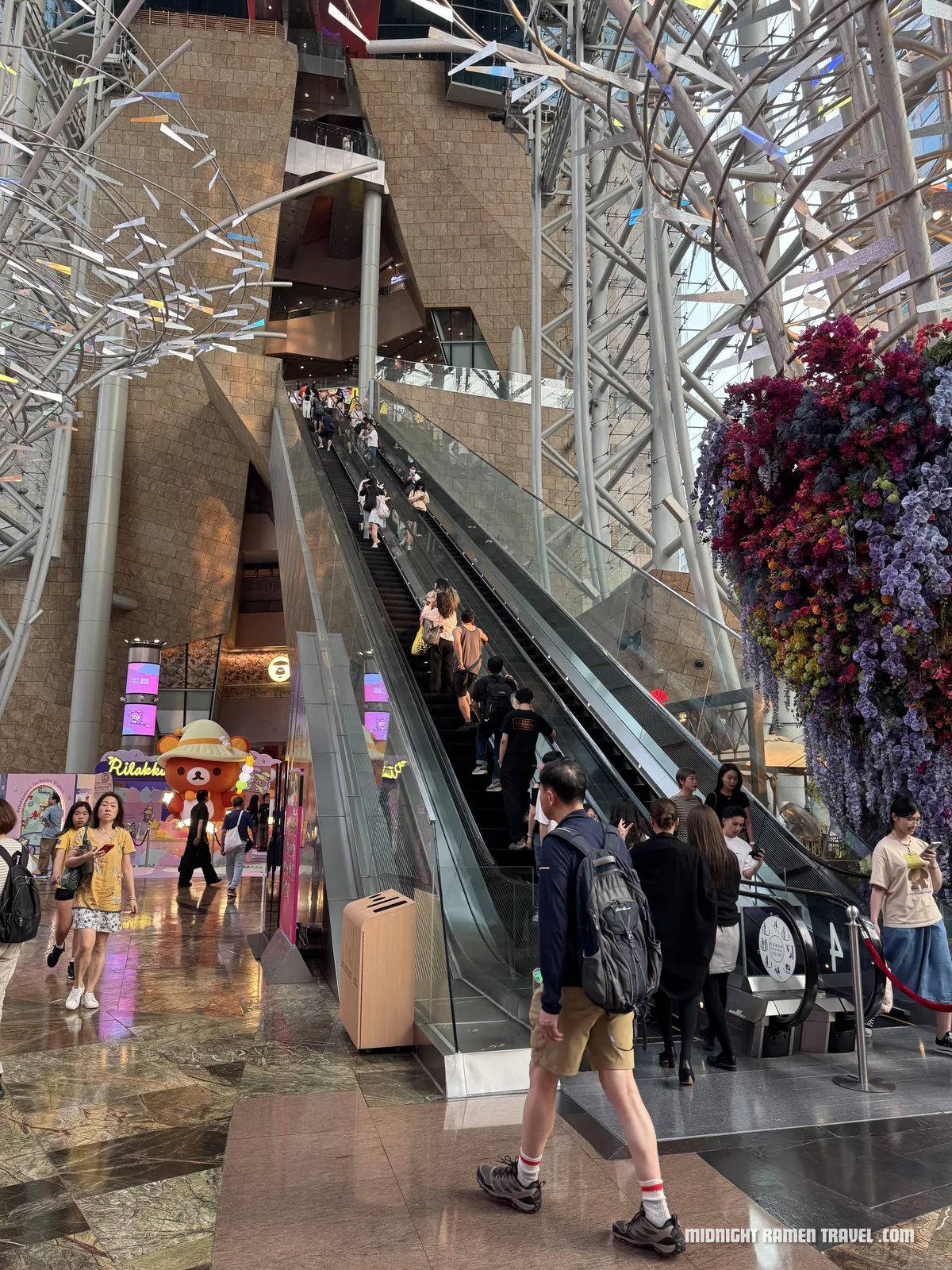
If your energy is fading, remember that Langham Place and K11 MUSEA are both mall stops. Do one properly rather than forcing both. Keep Kowloon Park for the green reset, and only choose the Museum of Art if the collection genuinely interests you.
Opening hours: Roughly 11:00am-11:00pm daily; individual tenants vary.
Cost: Free to enter.
Web: Langham Place
Estimated time: 20-45 minutes unless you stop to shop or eat.
Getting there: Argyle Street, directly connected to Mong Kok MTR Station.
6. Walk Nathan Road south
From Mong Kok, walk south down Nathan Road, the long arterial spine of Kowloon, towards Tsim Sha Tsui. It is all signage, crowds, shopfronts and that classic Hong Kong street density, and if you like photography, the stacked signs here are some of the best in the city. You can MTR it if your legs are done, but the walk is part of the experience.

If you are into gaming, Pokémon cards, figurines, old Game Boy games, or random collectibles, duck into Sino Centre on Nathan Road along the way. It is a tight, low-ceilinged little arcade/mall packed with tiny booths, and you will probably have to step inside shops just to let people squeeze past. It is not a must-do for everyone, but if you are into that kind of thing, it is a fun little detour.
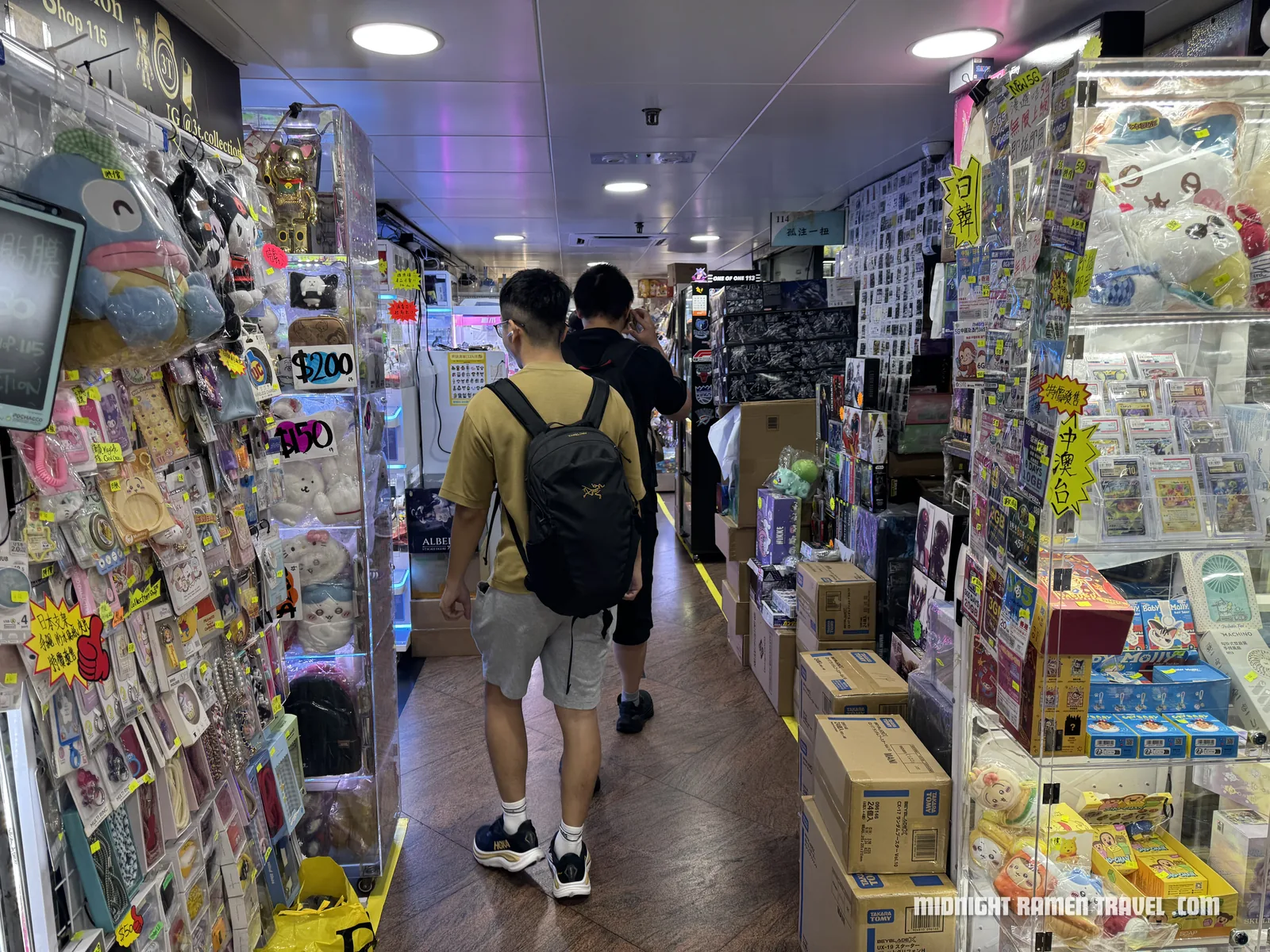
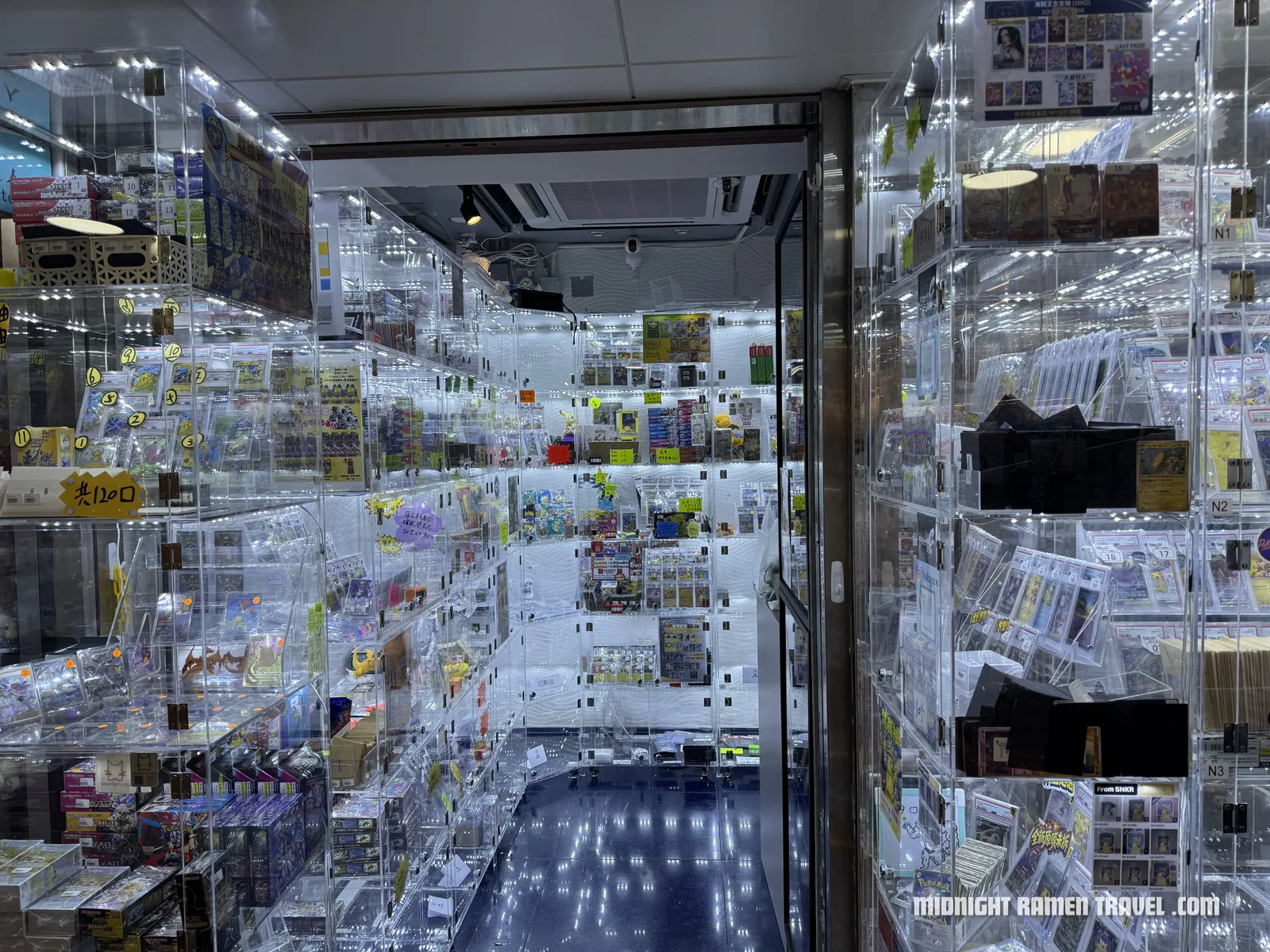
Cost: Free to walk. Sino Centre depends how much self-control you have.
Time needed: Allow around 40 to 50 minutes for the direct walk from Mong Kok to TST, and much longer once you add Sino Centre, photographs and other stops.
Late afternoon: Tsim Sha Tsui
7. Kowloon Park
When you reach the TST end of Nathan Road, duck into Kowloon Park for a breather. It is a big, green, surprisingly peaceful pocket right off the chaos, and a good place to reset before the evening.
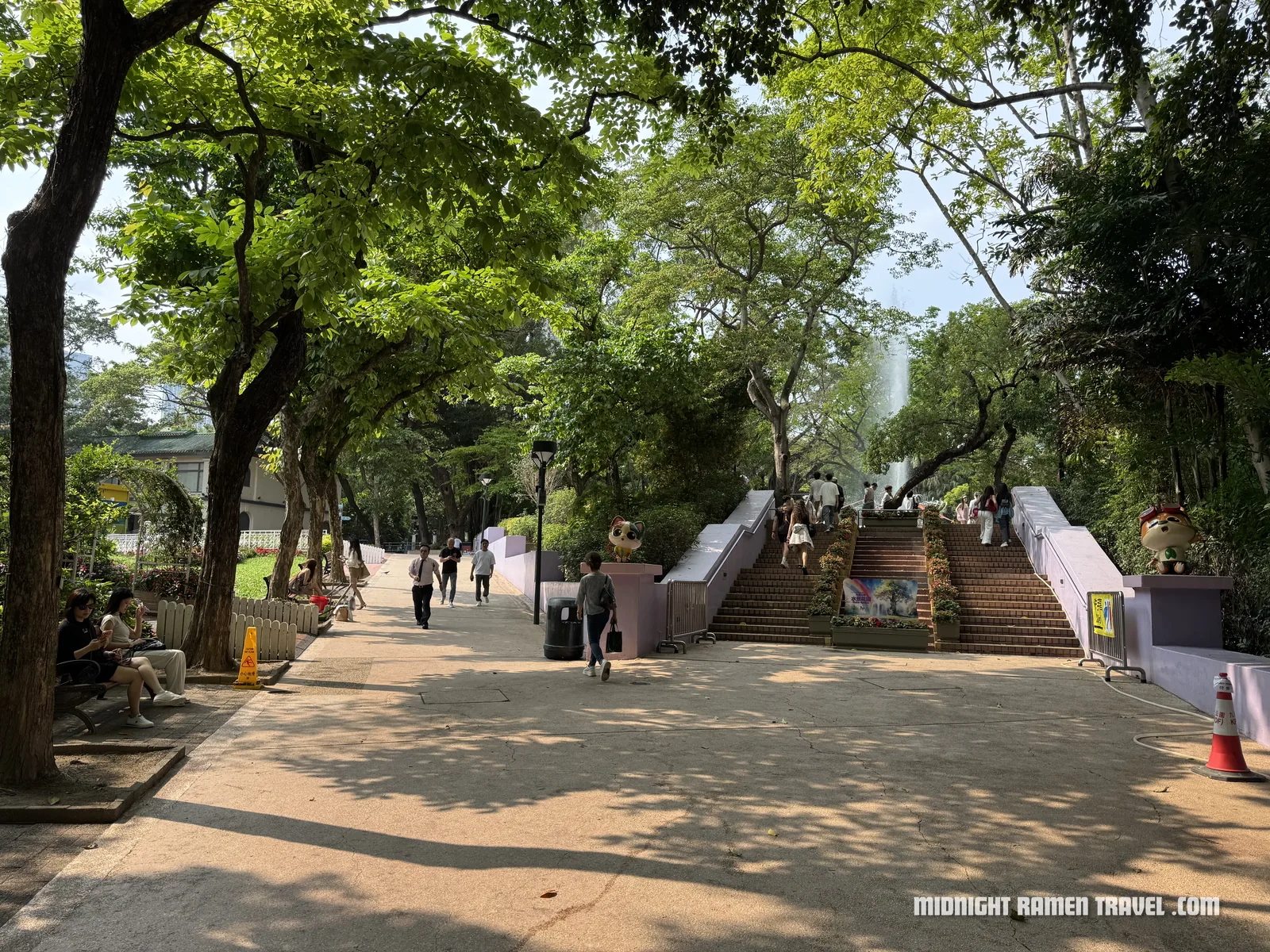
Opening hours: 5:00am-midnight daily.
Cost: Free.
Web: Kowloon Park
Estimated time: 20-30 minutes.
Getting there: Enter from Nathan Road or Haiphong Road in Tsim Sha Tsui. Some south-western areas are closed for construction until 2028.
8. K11 MUSEA or the Hong Kong Museum of Art
Depending on your mood and how you’re tracking, this is the window for something more polished. I recommend either:
- K11 MUSEA, a striking art-and-retail mall right on the waterfront, or
- Hong Kong Museum of Art, just next to K11, with harbour-facing galleries and free general admission.
Opening hours: Hong Kong Museum of Art 10:00am-6:00pm Monday and Wednesday-Sunday; closed Tuesday except public holidays. K11 MUSEA tenants keep individual hours.
Cost: K11 MUSEA is free to enter. Museum of Art general admission is free, with some special exhibitions ticketed.
Web: K11 MUSEA · Hong Kong Museum of Art
Estimated time: 1-2 hours if you go inside.
Getting there: Salisbury Road waterfront, near East Tsim Sha Tsui MTR Station.
For dinner before the evening section, two directions depending on your mood: Haiphong Road Temporary Market, an open-air cooked-food cluster near Kowloon Park for skewers, wonton soup and wok-fired noodles with no menu required, or a proper Cantonese roast-meats dinner such as Yung’s Tangerine Peel Roast Goose if you’d rather sit down.
Evening: Victoria Harbour Skyline at night & Temple Street night market
9. TST waterfront, Avenue of Stars and the skyline at night
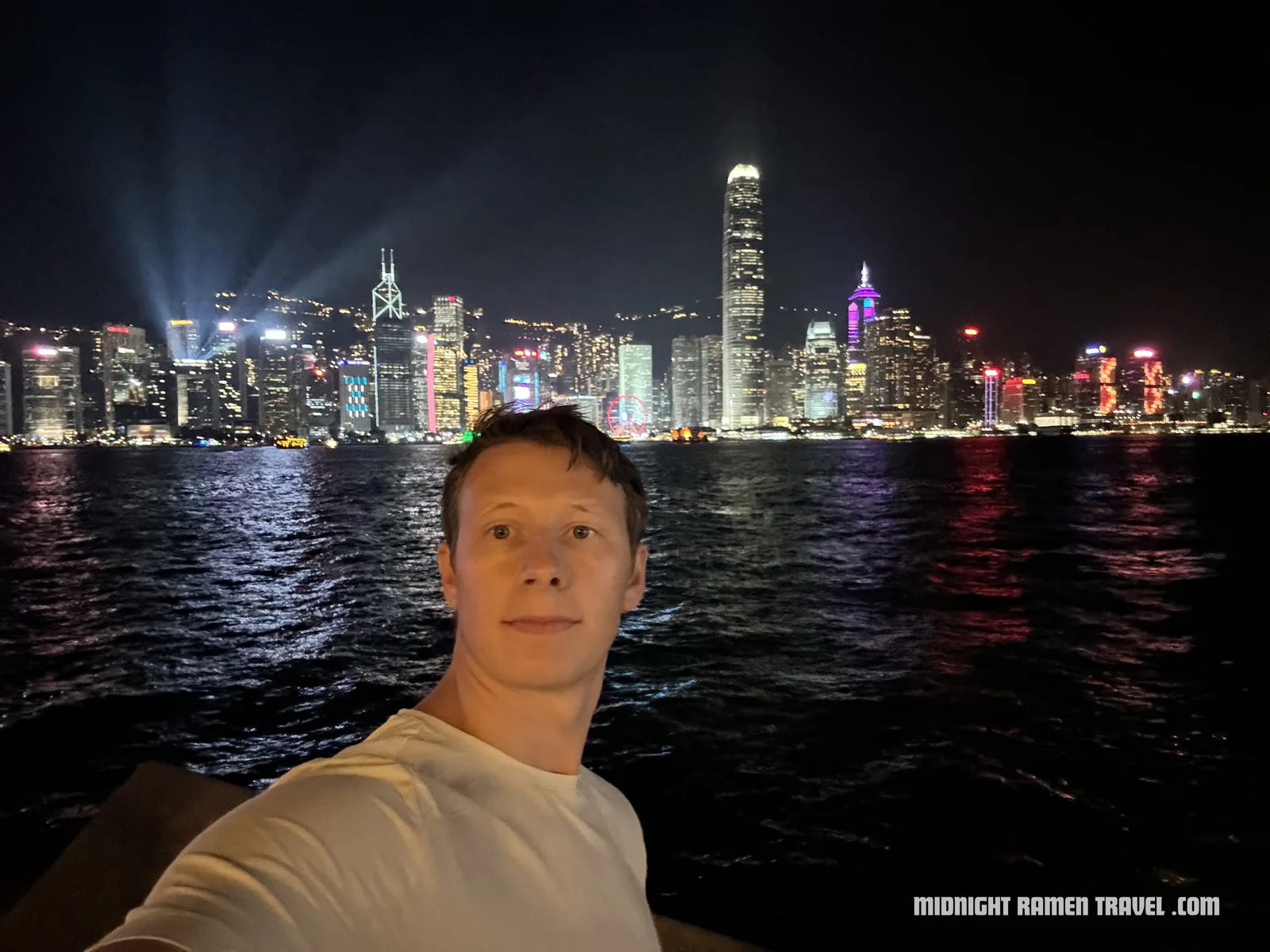
Head out to the Tsim Sha Tsui waterfront and the Avenue of Stars for the big one: the full skyline across Victoria Harbour back to Hong Kong Island. This is the postcard Hong Kong view, and it only gets better as the light drops, the towers switch on, and the harbour starts to glow.
For now, the Symphony of Lights runs nightly at 8:00pm and lasts about 10 minutes, with the Tsim Sha Tsui waterfront and Avenue of Stars as the official viewing spots with the soundtrack. My honest take: the skyline itself is the real draw, and the show is a bonus rather than the reason you came. For a first-timer, though, it is still a classic Hong Kong night moment.
!! Quick heads-up — the Symphony of Lights is being retired in the second half of 2026 and replaced with seasonal, holiday-time light shows dotted around the city (the Peak included). So depending on when you visit, it may already be gone. It doesn’t really change the plan. Like I said, the lit-up skyline was always the main event here, and that isn’t going anywhere, lasers or no lasers.
And if you’ve already ticked Hong Kong off, this is a decent excuse to come back and see whatever the new show turns out to be! My bet’s on a drone show, but we’ll see. Either way I can’t wait to go back and check it out!
Opening hours: Waterfront always accessible. The Symphony of Lights runs nightly at 8:00pm (about 10 minutes), but is being retired in the second half of 2026, so check it’s still on for your dates.
Cost: Free.
Web: A Symphony of Lights
Estimated time: 45-90 minutes through sunset and blue hour.
Getting there: Tsim Sha Tsui waterfront promenade or Avenue of Stars.
10. Temple Street Night Market
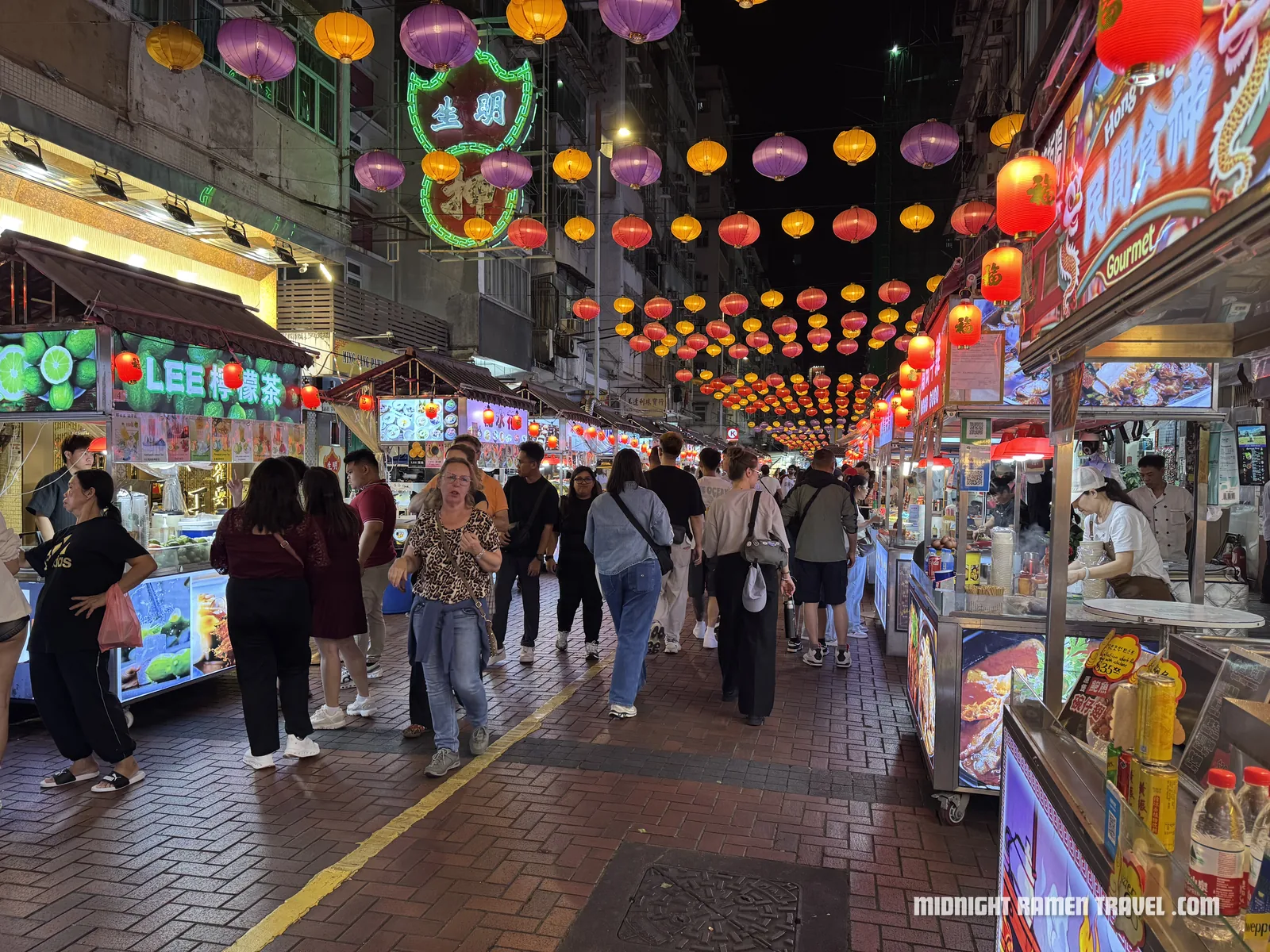
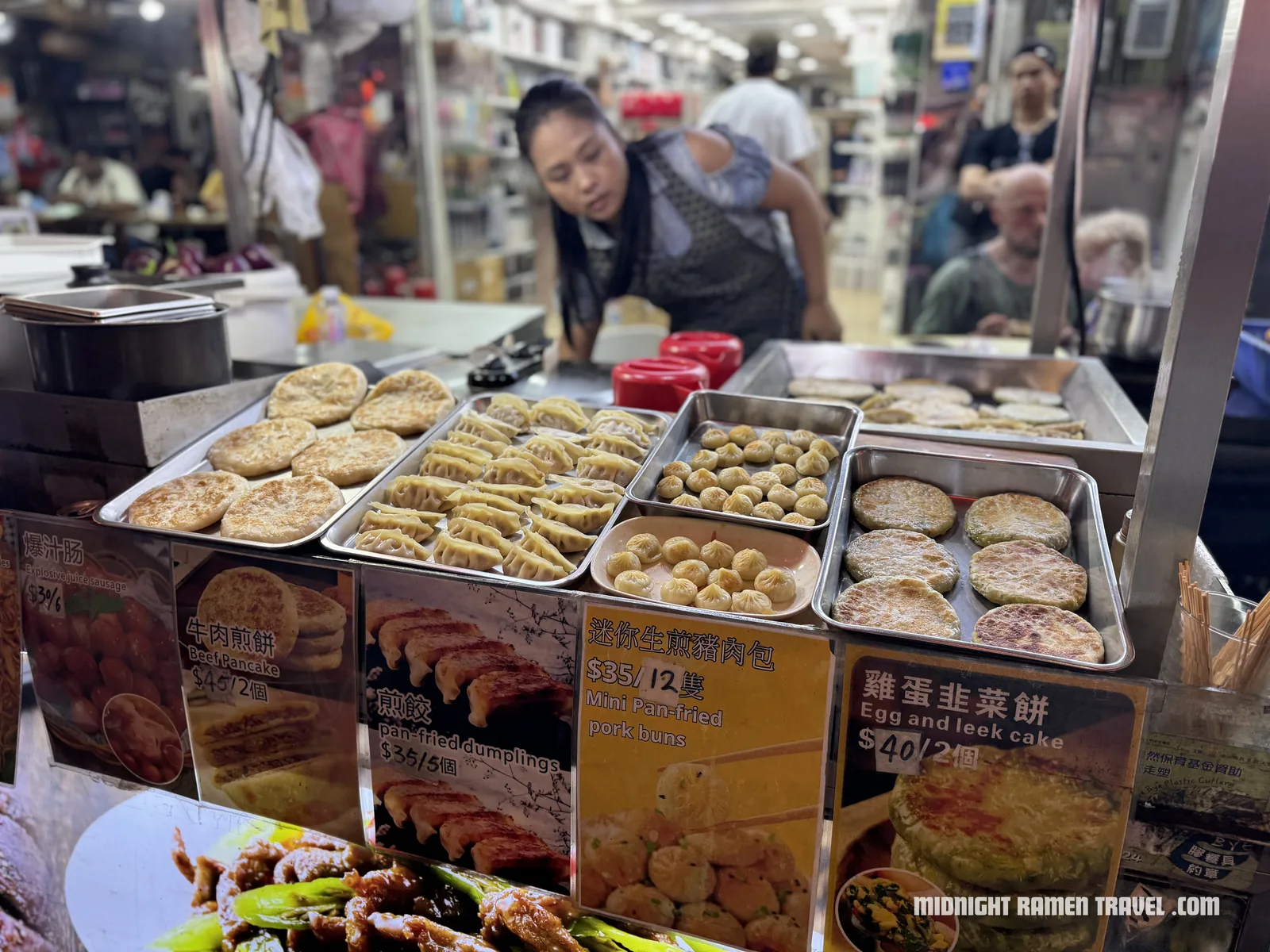
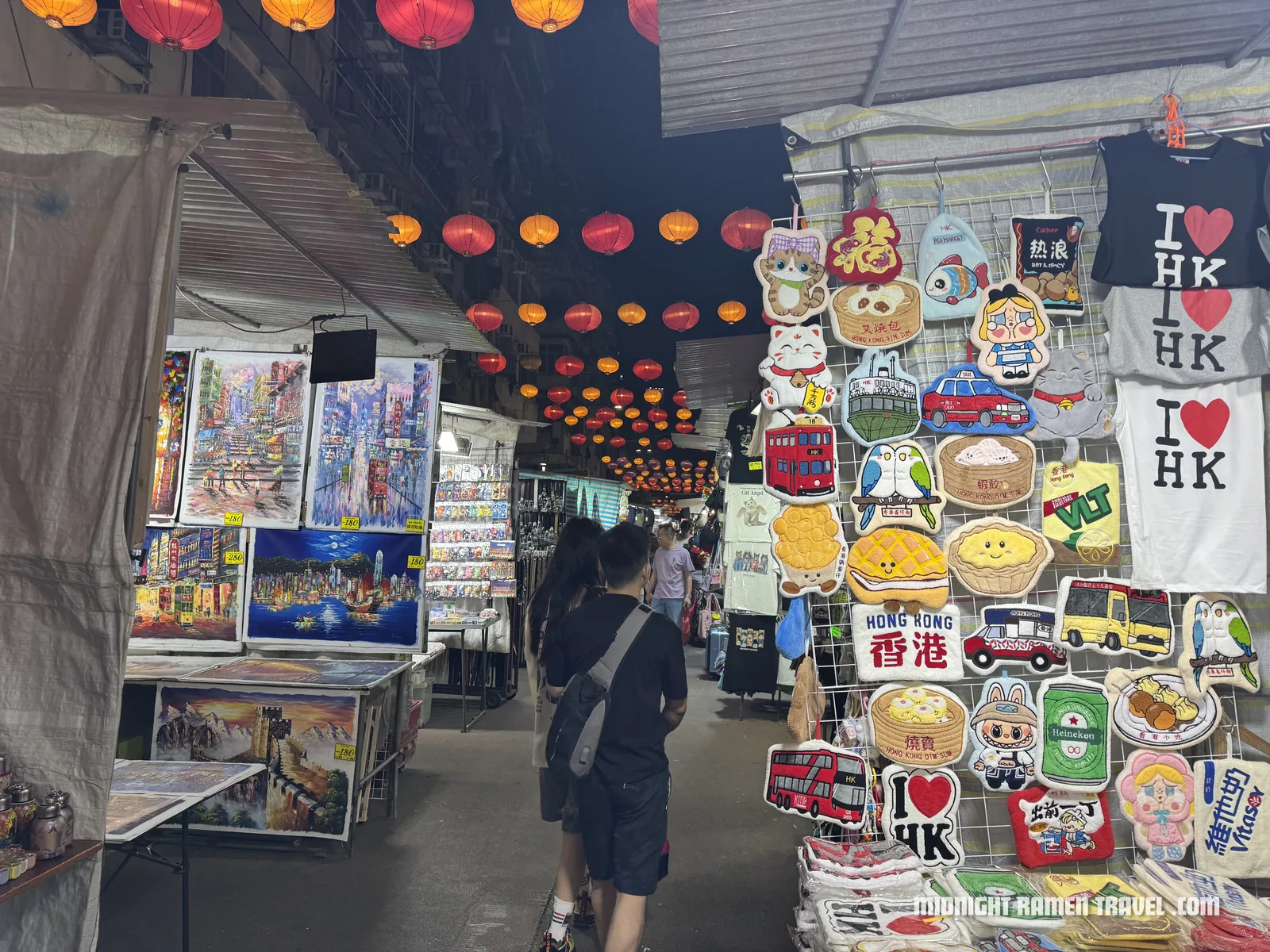
End the day back north at the Temple Street Night Market. To be fair, Temple Street is good but it did not necessarily blow me away after wandering many of the other markets. Much of the merchandise is similar to what you see at the other tourist-oriented markets, so I would not build the whole night around shopping here. It is still an easy first-timer stop after the waterfront, with food stalls, fortune tellers, and a messier late-night side of Kowloon. Have a look, eat if something appeals and move on when you have had enough.
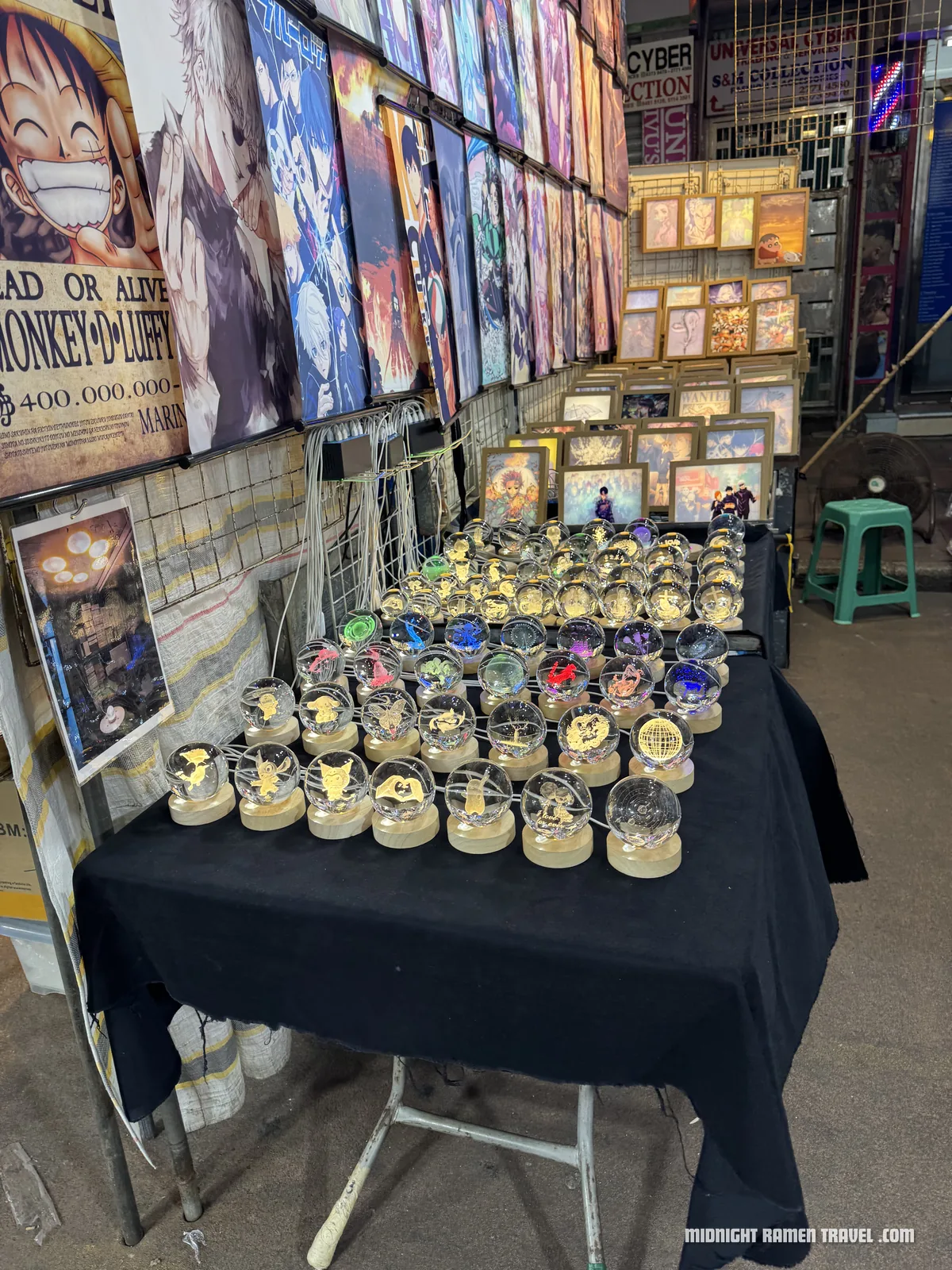
Opening hours: Stalls operate roughly 2:00pm-midnight and are liveliest from about 7:00pm.
Cost: Free to wander.
Web: Temple Street Night Market
Estimated time: 30-60 minutes.
Getting there: Temple Street between Jordan and Yau Ma Tei MTR stations.
Getting there: Temple Street is a quick hop from the TST waterfront, not a serious backtrack. The MTR from Tsim Sha Tsui to Jordan is one stop, and Exit A puts you near the market. If you would rather walk, head north along Nathan Road. The order works in your favour: you want the harbour around blue hour and Temple Street after dark, when it is liveliest. The Day 2 map above shows the route.
Day 3 - Lantau Island
(Or choose your favourite option from the list below)
By Day 3 you have covered the main Hong Kong Island route and spent a full day in Kowloon, so this is the day to see something different. For a first trip, the classic choice is Lantau Island, which I have written up in full below. You get the Ngong Ping 360 cable car, the Big Buddha, Po Lin Monastery and Tai O in one day.
I have done Lantau and still think it makes the most sense for a first trip, but these days I would probably pick a food day followed by Aberdeen and the south side of Hong Kong Island instead. Tai O is the one part of Lantau I would happily go back for. The cable car is fun but expensive, and Disneyland is a proper day out in itself, so it needs its own separate day.
LANTAU ISLAND DAY
After two days in the city, Lantau is a chance to see a completely different side of Hong Kong: cable-car views, the Big Buddha, a working monastery, and the fishing-village landscape of Tai O, all in one day. It is the first-timer choice for good reason, even if it is not what I would repeat after six visits.
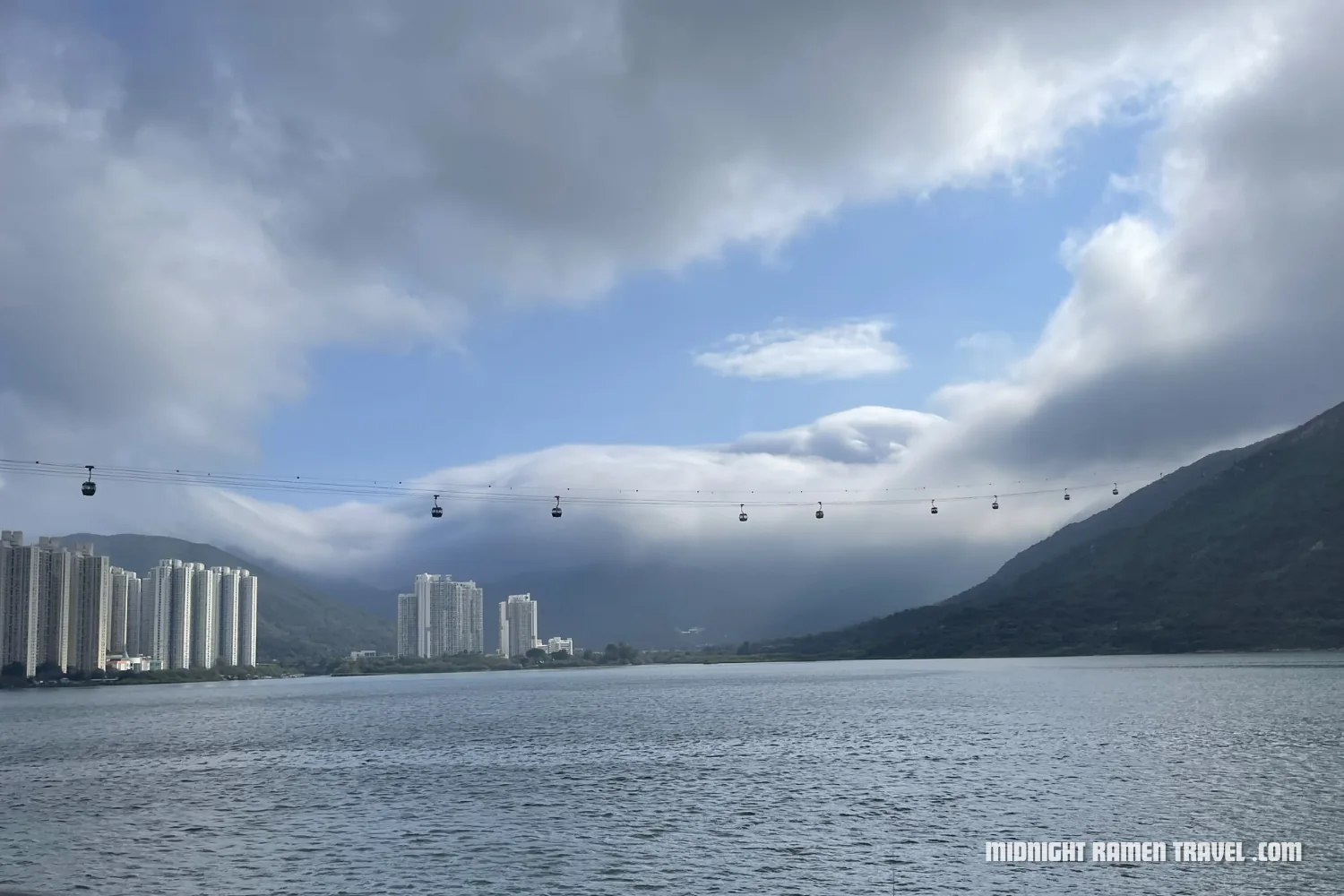
1. Head to Tung Chung
Start by making your way to Tung Chung Station, where the cable car departs. From Central, stay on the Tung Chung Line all the way. From Tsim Sha Tsui, take the Tsuen Wan Line to Lai King, change to the Tung Chung Line, and ride it to the end. The cable car terminal is right next to the station, just follow the signs.
Opening hours: Start early enough to reach the cable car shortly before opening.
Cost: Standard MTR fare from your starting station.
Web: MTR journey planner
Estimated time: 45-60 minutes from the city.
Getting there: MTR to Tung Chung Station, then follow signs to the cable-car terminal.
2. Ngong Ping 360 cable car
The Ngong Ping 360 is a big part of the experience, not just transport. On a clear day the payoff is the views: mountains, sea, the airport and the wide green sweep of Lantau. You can choose between the standard cabin and the Crystal Cabin with the glass bottom. The ride is fun, but it is expensive for what it is. If you are already paying for it on a first trip, I would still consider the Crystal Cabin and do it properly.
Important: this itinerary continues from Ngong Ping to Tai O by bus, then returns from Tai O to Tung Chung. You therefore want a one-way cable-car ticket, not a return ticket, unless you deliberately change the route.
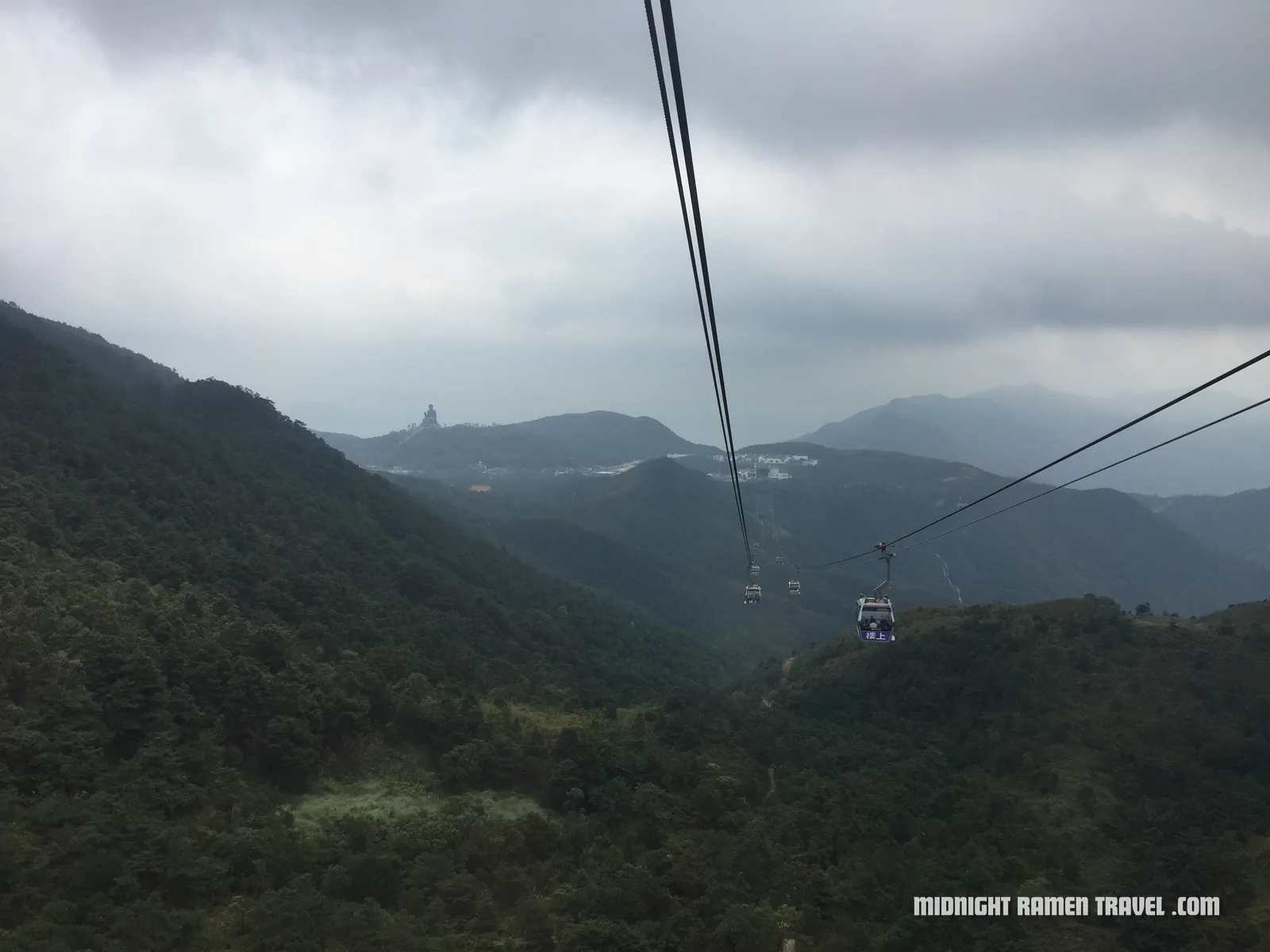
Opening hours: 10:00am-6:00pm weekdays; 9:00am-6:30pm weekends and public holidays. Weather and maintenance can suspend service.
Cost: Adult one-way HK$205 Standard Cabin or HK$240 Crystal Cabin.
Web: Ngong Ping 360 tickets and operating information
Estimated time: About 25 minutes in the cable car, plus queue time.
Getting there: Cable-car terminal beside Tung Chung MTR Station, Exit B.
→ Click HERE to check current prices and book the Ngong Ping 360 cable car
3. Big Buddha and Po Lin Monastery
At the top, head first to the Tian Tan Buddha, better known as the Big Buddha, a 34-metre seated bronze figure finished in 1993. It is 268 steps up to the base, so decent shoes help. Right nearby is Po Lin Monastery, founded in 1906, with its halls, gardens and clouds of incense.
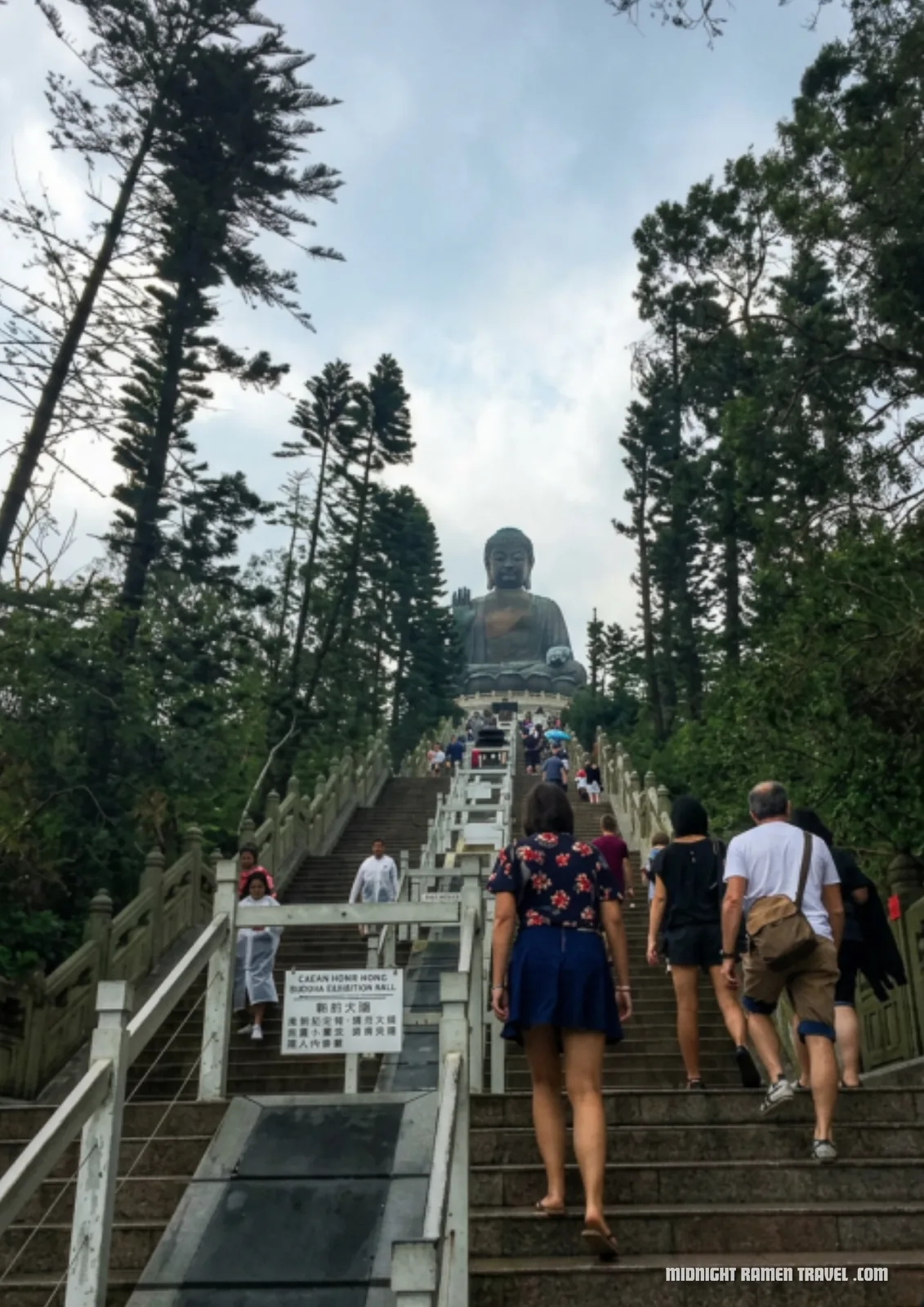
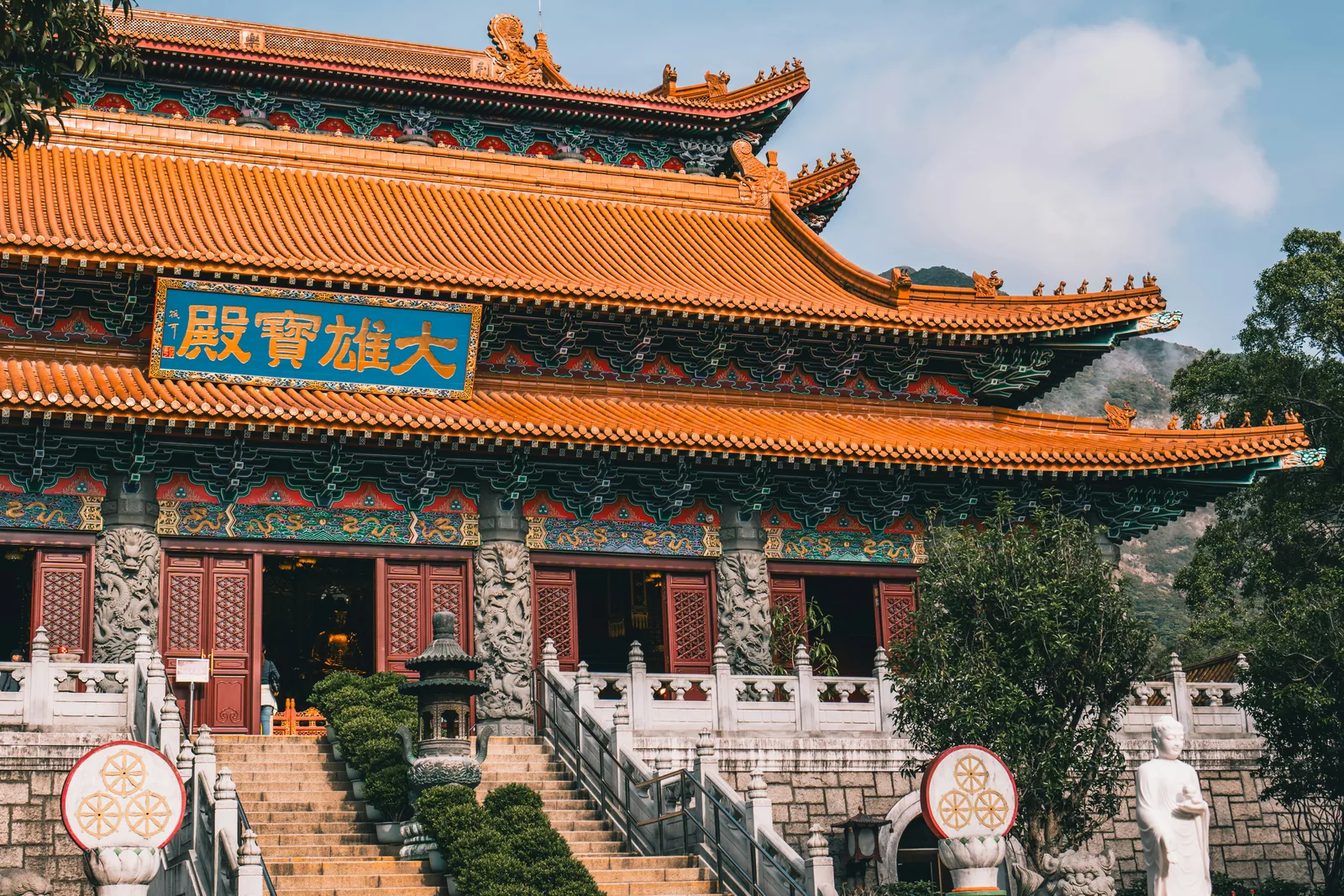
Opening hours: Generally 10:00am-5:30pm; exhibition halls and monastery facilities may keep different hours.
Cost: Free to visit the Buddha and monastery grounds.
Web: Po Lin Monastery and the Big Buddha
Estimated time: 1.5-2 hours for both.
Getting there: Walk through Ngong Ping Village from the cable-car terminal.
4. Lunch
The bus to Tai O takes a while, so it is worth eating before you go unless you would rather hold out. Options: grab something in Ngong Ping Village, keep it simple and meat-free at the Po Lin Monastery vegetarian kitchen, or wait and eat in Tai O.
Time needed: Allow about 45 min.
5. Bus 21 to Tai O
From the Ngong Ping bus terminus, take New Lantao Bus 21 to Tai O. Check the timetable first, it runs far less often than transport back in the city, and missing one can cost you a while.
Opening hours: Route 21 is infrequent, so check the live timetable before leaving Ngong Ping.
Cost: HK$7.90 Monday-Saturday; HK$19.20 Sunday and public holidays.
Web: New Lantao Bus Route 21
Estimated time: About 20 minutes on the bus, plus waiting time.
Getting there: Board at Ngong Ping bus terminus and leave at Tai O.
6. Explore Tai O fishing village
Instead of towers, malls and neon, Tai O is stilt houses, narrow waterways, wooden bridges, dried seafood, shrimp paste, little temples and weathered old lanes. The strongest thing about it for me is the contrast. After the modern metropolis of Kowloon and Hong Kong Island, it feels like one of Hong Kong’s surviving fishing-village landscapes rather than another version of the same city.
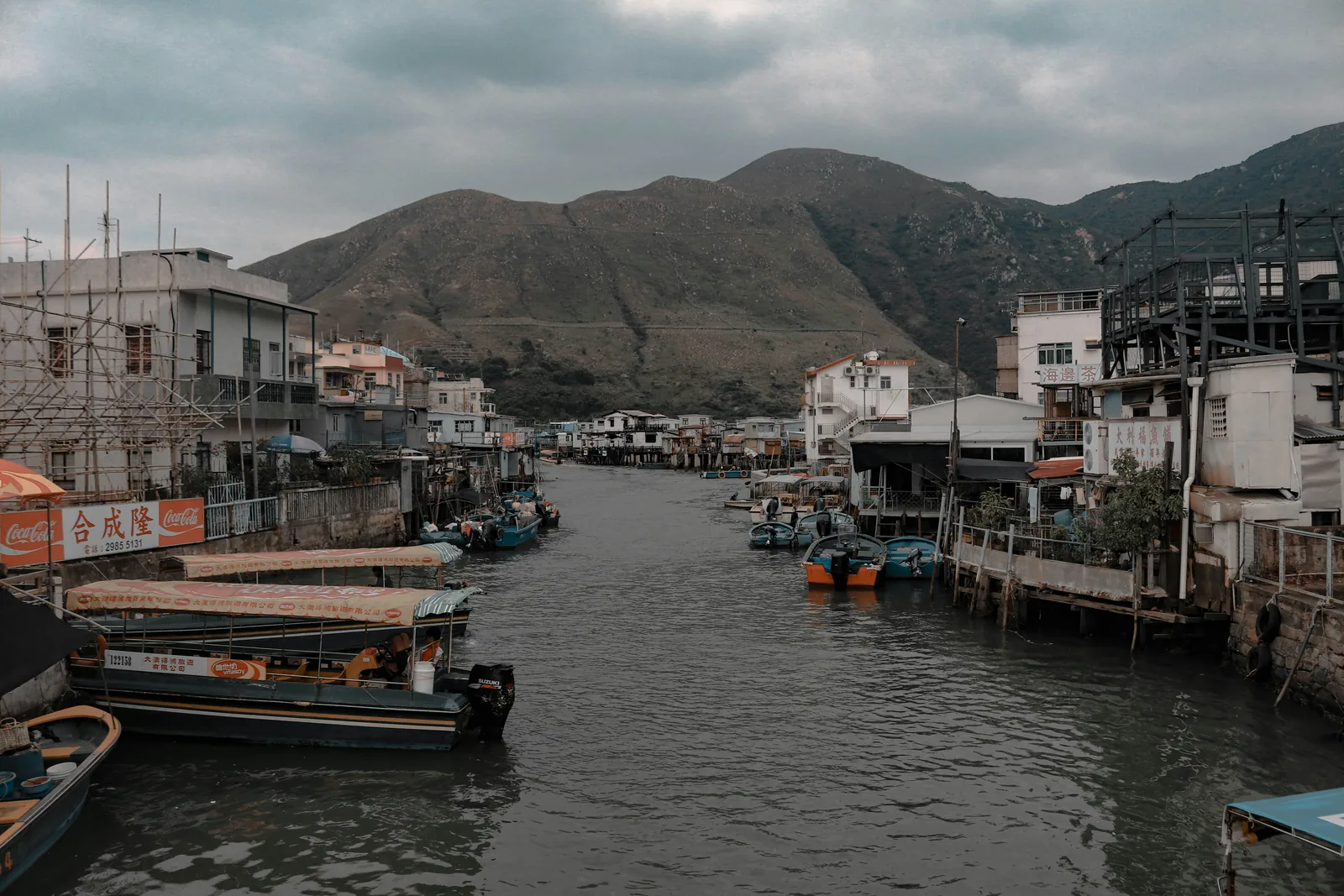
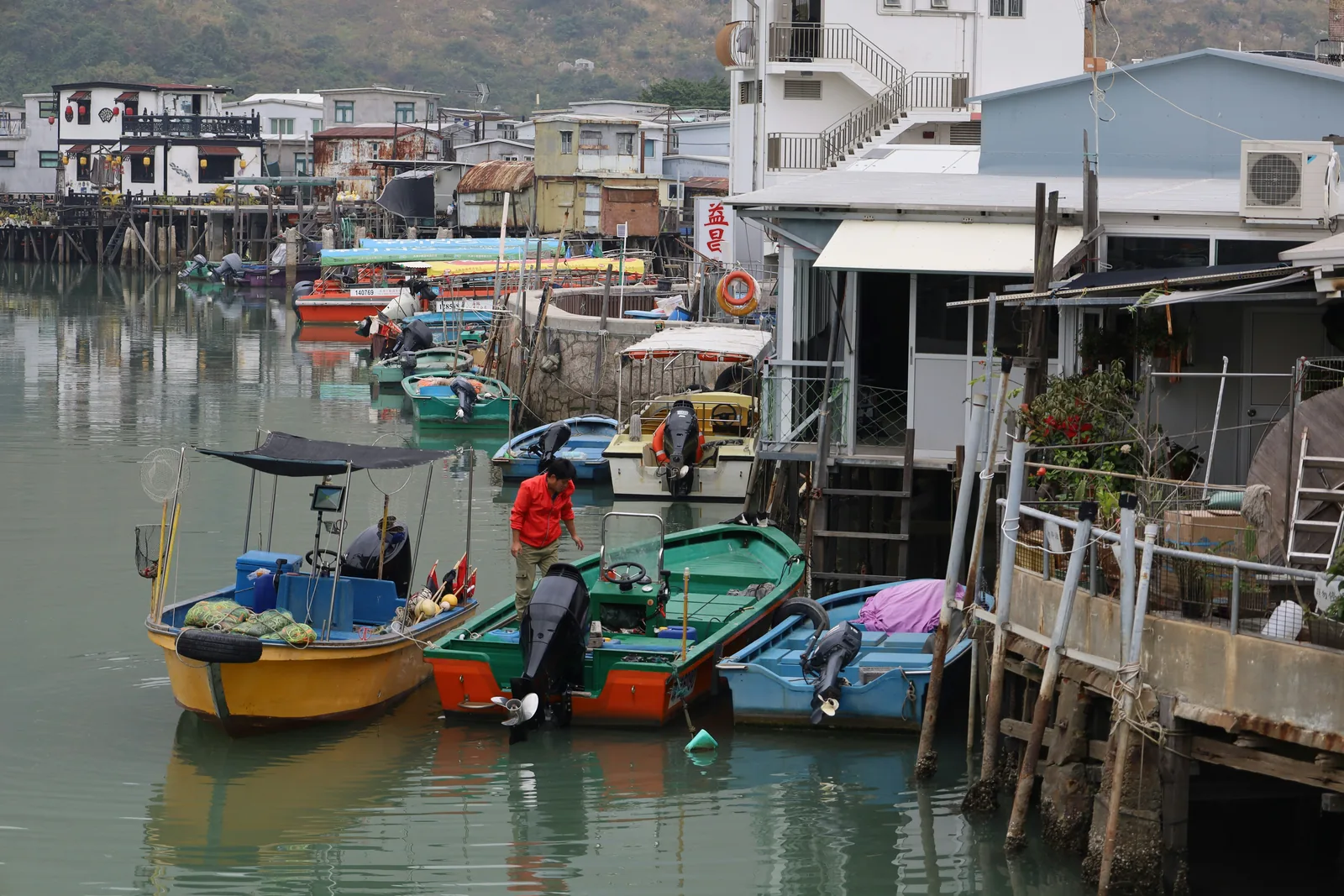
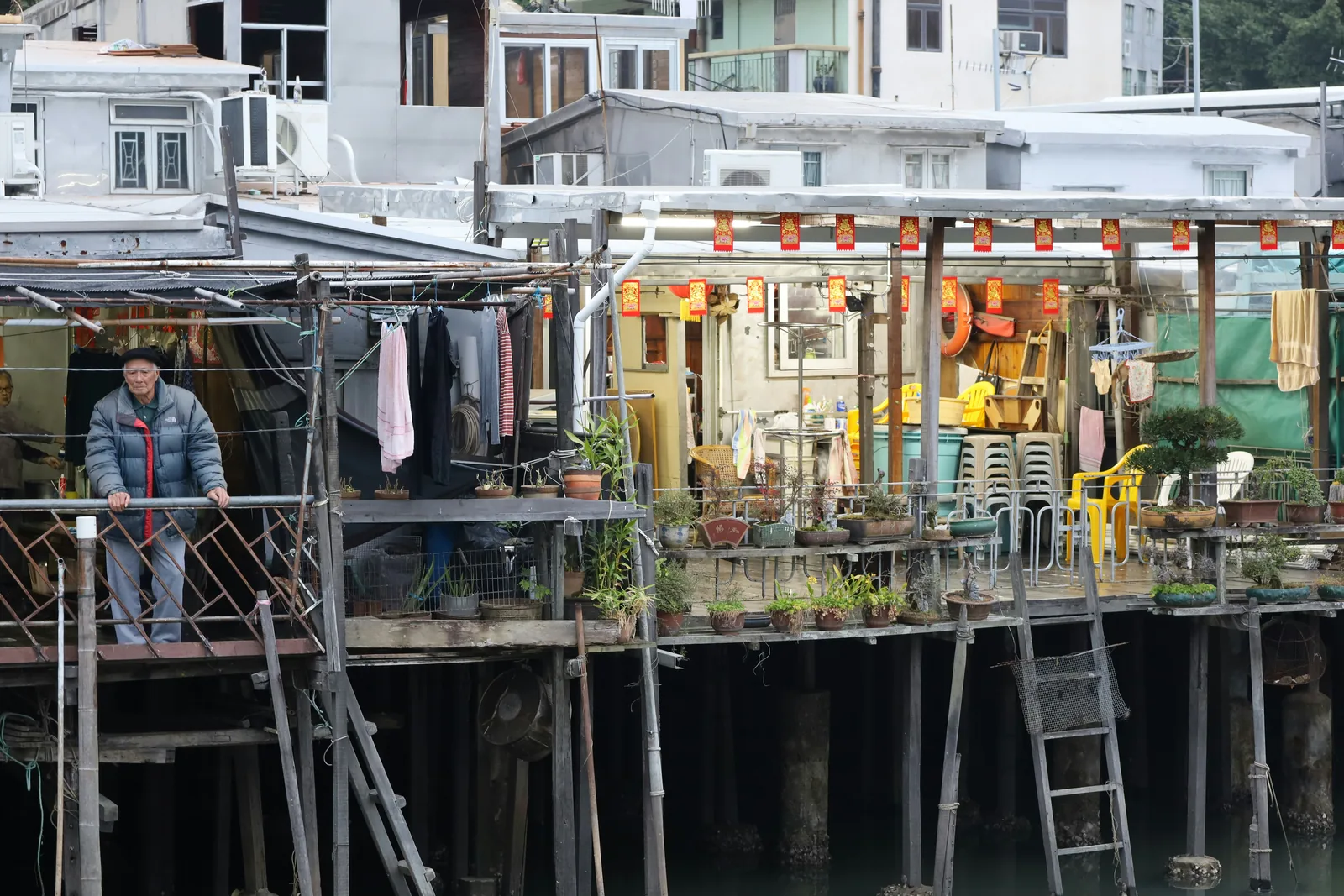
Start by crossing Tai Chung Bridge, one of the best photo spots in the village, where the river, boats, stilt houses and mountains all line up at once. Walk in via Kat Hing Street, take your time past the dried-seafood and shrimp-paste shops, and stop by Kwan Tai Temple and the little lantern-strung square. Keep wandering over the smaller bridges, including Sun Ki Bridge, another great stilt-house viewpoint. If you want to stretch it out, head up Kat Hing Back Street towards Yeung Hau Temple and on to the Tai O Viewing Point, where you can see out to the airport and the Hong Kong to Zhuhai to Macau Bridge.
If you want another angle on the village, consider one of the short boat rides through the waterways. I did not take one myself, so I would treat it as an optional extra rather than a personal must-do. Loop back through the middle of the village and out to the Tai O Heritage Hotel, set in a restored 1902 police station. The walk out there is worth it even if you do not stop for afternoon tea.
More than anything, leave time to just wander. Tai O is the kind of place where the best moment is usually one more small bridge or one more side lane.
Opening hours: The village is always accessible; shops, temples, boats and the Heritage Hotel keep individual hours.
Cost: Free to wander. Confirm the fare with boat operators before boarding.
Web: Tai O Village
Estimated time: 2.5-3 hours.
Getting there: New Lantao Bus 21 from Ngong Ping, or Bus 11 from Tung Chung if visiting separately.
7. Head back and final dinner
By late afternoon, make your way back to the Tai O bus terminus and take New Lantao Bus 11 to Tung Chung, then the MTR to your area (Tung Chung Line to Hong Kong Station for Central, or change at Lai King for TST). Route 11 currently costs HK$14.00 Monday to Saturday and HK$23.30 on Sundays and public holidays. For your last night, pick a good final dinner, and if you have anything left in the tank, one more stroll along Victoria Harbour is a fine way to close out the trip.
For the final dinner, treat yourself a little after three days of casual counters, markets and noodle shops. If you are staying in Tsim Sha Tsui, Yè Shanghai at K11 MUSEA is a polished one-Michelin-starred Shanghainese restaurant in Michelin’s $$ price category. If you are returning through Central, look at Neighborhood on Hollywood Road, another one-Michelin-starred $$ restaurant with a casual atmosphere and a seafood-heavy sharing menu. I have not eaten at either, so check the current menus and choose the one that appeals to you.
Other options for Day 3
A. Food day and south Hong Kong Island (my current preference)
Another strong alternative is a food tour followed by the south side of Hong Kong Island. Aberdeen is the part I genuinely like: more laid-back, shaped by its harbour and very different from Central. You can combine it with Stanley using green minibus 52, which runs via Aberdeen and Stanley, but check the live HKeMobility route before leaving. I would manage expectations at Stanley Market. It has not felt fully recovered from the COVID years and, in my view, is not what it used to be. Go for the waterfront and the broader south-side day rather than treating the market as a major attraction.
→ Click HERE to check current prices and book the Hong Kong street food tour
B. Cheung Chau or another outlying island
If you want a slower island day, Cheung Chau is a well-known option for its harbour, seafood, beaches and walking routes. Ferries leave from Central Pier 5, with ordinary and fast services throughout the day, and the compact village centre is easy to explore on foot or by bicycle. If you have already visited Cheung Chau, take a ferry to another smaller island such as Peng Chau and wander without much of a checklist. I have not been to Peng Chau yet, which is exactly why it appeals to me. Check the current ferry timetable before leaving.
C. Hong Kong Disneyland (or Ocean Park)

If a theme park is your thing, Hong Kong Disneyland is genuinely fun and noticeably less busy than some of the bigger ones (looking at you, Japan), so the queues are bearable. Ocean Park is the other option, part aquarium and part theme park. I would not put either inside the core three-day itinerary, but they work well as an add-on day.
→ Click HERE to check current prices and book Hong Kong Disneyland tickets
→ Click HERE to check current prices and book Ocean Park tickets
D. Macau (its own world, one hour away)
Macau is fascinating and I highly recommend it, but personally I think it is really its own thing, not a Hong Kong side trip. Portuguese colonial squares, egg tarts, old churches and giant casino resorts all sit beside each other. If you can, give it a full separate day (or even stay a night or two) rather than squeezing it in. Remember to bring your passport because it is a separate immigration region.
→ Click HERE to check ferry times and book Hong Kong to Macau ferry tickets
E. A day trip into mainland China
A mainland China side trip can be an interesting alternative, but it needs more planning than the Hong Kong options above. Shenzhen is the most practical choice, while Guangzhou is possible on selected high-speed services. Journey times vary by train and station, so use the current MTR High Speed Rail timetable rather than relying on a headline travel time. Mainland entry rules depend on your passport and can change, so confirm your eligibility before buying a ticket. I would also avoid promising a blanket cost saving because that depends heavily on where you go and what you do.
F. Dragon's Back and Shek O (nature and coast)
If you want a day with more nature and coastal scenery, this is the best combination. Dragon’s Back is one of Hong Kong’s best-known hikes, a manageable ridge walk with big sea views. Shek O, a laid-back beach village, is the natural place to finish.
If you would like a full write-up of any of these other days, let me know in the comments and I will put one together.
Where to stay (the short version)
Hong Kong is compact and the transport is so good that almost anywhere central can work, so the area you pick matters more than the exact hotel. Here’s the quick version of who each main base suits, and my full guide covers the specific hotels.
- Tsim Sha Tsui: best for first-timers. The harbour promenade, skyline views, museums, the Star Ferry and the MTR are all right there, with hotels at every budget.
- Causeway Bay: best for shopping, energy and late-night eats, with Victoria Park nearby when you need a break from the concrete.
- Wan Chai: best for a practical Hong Kong Island base that still feels central, well connected and a little more local than Central or Causeway Bay.
- Central and Sheung Wan: best for walkable sightseeing, SoHo nightlife, cafés and easy access to the island side, though Central is one of the most expensive places to stay.
- Jordan, Yau Ma Tei and Mong Kok: best for value and a busier, more everyday Kowloon feel. Still well connected and packed with cheap eats.
One tip from experience: don’t stay too far out just to save a few dollars on a short trip. I booked Aberdeen on my first visit, thought I’d found a bargain, then realised it was about as far from the action as you’d want for three days. It worked out, but I wouldn’t do it again on a quick visit.
For the full rundown, including the specific hotels I’d book in each area and at every budget, see my complete guide: Where to Stay in Hong Kong.
What To Bring
Hong Kong is an easy city to travel around, but you’ll walk a lot, lean on your phone constantly, and deal with real heat and humidity depending on the season. A few things I’d make sure to bring:
- Good walking shoes: you will almost definitely walk more than you expect.
- Travel adaptor: Hong Kong uses Type G plugs, same as the UK.
- Power bank: you will likely be using your phone all day for maps, transport, photos, bookings and translation.
- Breathable clothes: especially if visiting in the warmer / humid months.
- Light jacket or layer: malls, restaurants and the MTR can be very air-conditioned.
- Hat and sunglasses: useful for harbour walks, Lantau, beaches and hiking.
- Small umbrella: good for both rain and sun.
- Sleeping mask and ear plugs: especially if staying in a hostel, budget hotel, or somewhere close to busy streets.
- Good earphones: useful for flights, ferries, MTR rides, and my very long walking videos obviously.
- Basic medicines: painkillers, stomach tablets, antihistamines, or whatever you normally rely on when travelling.
Related Posts
If you’re looking for more posts on Hong Kong, like detailed my top things to do, where to stay, or where to eat, check out these posts as well:
- Things to Do in Hong Kong
- Where to Stay in Hong Kong
- Where to Eat in Hong Kong (coming soon)
- Best Photo Spots in Hong Kong (coming soon)
- HK Disneyland Guide (coming soon)
- Hong Kong to Mainland China: Getting There by Bus, Train or Ferry (coming soon)
MY FAVOURITE TRAVEL RESOURCES
Flights
I use Skyscanner (which is the best flight comparison tool out there in my opinion) and Google Flights, however once you find the flight you’re after – make sure to double check the airline’s website as well.
Accommodation
For accommodation, Booking.com is typically my first pick, as it usually has the most flexible booking policies. I also check Agoda, which is often good for Asia. And for China, Trip.com is typically the best option.
Logistics
When I need to do more comprehensive logistical planning than just Google Maps I use Rome2Rio or for trains ManInSeat61 is amazing.
Activities
For booking activities and deciding what to do, I typically use Klook or GetYourGuide. Other options I compare are Viator, Expedia and Tripadvisor. For mainland China, Trip.com is usually the most comprehensive.
Insurance
I have travel insurance 100% of the time as you never know what might happen. I have tried a few over the years and my current recommendation is WorldNomads. Also, many credit cards offer travel insurance as part of their package, so check to see if you are covered.
Connection
For e-Sim I recommend grabbing one off Klook or using Airalo. And for VPN, my main one I use is NordVPN, and for China I also have a couple backups – ExpressVPN and LetsVPN.
Pack
There are too many to list here – so please check out my preferred travel gear, camera gear and packing list guide here.
Affiliate disclosure: Some links in this section are affiliate links. If you book or buy through them, I may earn a small commission at no extra cost to you. This helps support Midnight Ramen and keeps the site running — thank you ❤️